


For the Citizens of Humanity Group, with its brands Citizens of Humanity (COH) and AGOLDE, the answer is clear: no. For the California-based denim label, sustainability is not the goal but the starting point. COH is taking a different path: regeneration.
This means not just minimizing harm but actively doing good – healing the soil, capturing CO₂, supporting people across the supply chain, and creating a planet worth living on for future generations. It's a philosophy that runs from cotton fields to washing facilities, treating denim not just as fashion but as a tool for change. An ambitious goal? Absolutely. Yet Citizens of Humanity demonstrates how a bold vision can translate into concrete action – through science-based programs, technological innovation, and a mindset that questions every step of the supply chain.
In the Beginning was the Soil: Regenerative Cotton as the Foundation
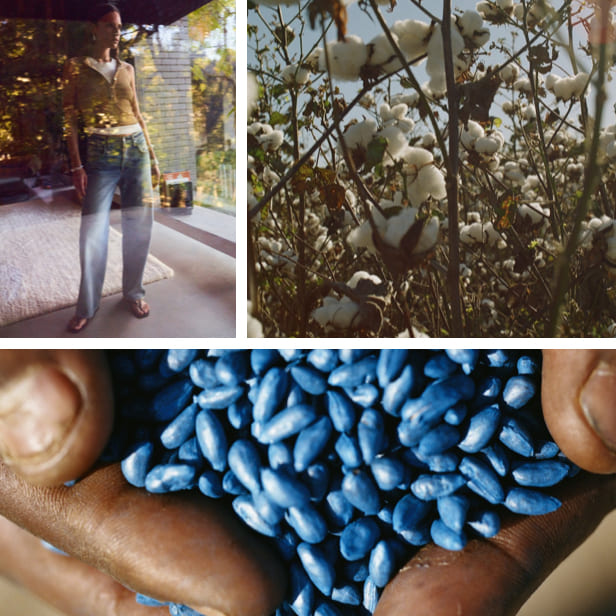
To understand COH's supply chain, you have to start in the fields – where everything begins. In the cotton fields of the U.S. and Turkey. Here, farmers grow regenerative cotton for COH's production. Regenerative farming cultivates a healthy relationship between cotton plants, the soil, and the Earth's atmosphere. Healthier soil creates a healthier environment. By reducing CO₂ emissions and restoring soil health, regenerative farming enables higher yields, helps combat climate change, and supports the recovery of vital biological systems.
Sustainability is not just about eliminating or reducing one harmful element of a product or service. It's dynamic – just like regenerative farming. And it aligns with one of COH's core values: people.
This initiative enables farmers and workers to earn better wages, sustain their families and farms, and support their communities. Not every farm uses the same methods or needs to follow identical processes – these vary depending on individual needs and geographic conditions.
But how exactly does regenerative farming work – and who benefits from it? Throughout the growing season, farmers apply specific regenerative practices: such as reducing or eliminating tillage (no-till farming), using fewer synthetic pesticides and fertilizers, and integrating controlled livestock grazing. All of these practices help strengthen plant health and support a living, resilient soil ecosystem.
No-till farming plays a particularly crucial role here: Traditional plowing releases stored CO₂ from the soil, whereas no-till methods protect the soil's natural carbon storage and actively contribute to carbon sequestration.
For farmers, regenerative farming means not only greater environmental responsibility but also tangible benefits: Healthy soil produces better yields, reduces labor requirements, and provides more stable and reliable income over time. Regenerative farming creates a true win-win – benefiting the environment, food security, and the people who work the land.
COH pays farmers fair prices and guarantees purchase volumes – offering stability in a system that often places the risk on growers.
Since the program began in 2022, a total of 14 farms now produce for the Citizens of Humanity Group, and over 9 million pounds of regeneratively grown cotton have been integrated into the supply chains of COH and AGOLDE. Every US-based farm is audited annually to meet the rigorous Integrity Grown™ standard – more than a label, it's a promise of transparency and fairness.
But the path isn't easy. Droughts hit, pests adapt, and old habits die hard. Regenerative farming is complex, requiring knowledge, patience, and support. That's why COH provides expert guidance and maintains close communication with its farm partners.
Blue, But Better: The Eco-Indigo Revolution
Cotton is just the beginning. The iconic indigo dye that defines denim has long had a dark side: conventional indigo is typically derived from petroleum, fixed through energy-intensive processes, and reliant on harsh chemicals.
Enter Eco-Indigo – a true game-changer. In collaboration with French biotech pioneer Pili, COH has developed a bio-based indigo made from renewable resources like sugar. Through a cutting-edge process of fermentation and green chemistry, sugar is transformed into a dye that matches the depth, richness, and character of traditional indigo – but with a dramatically smaller environmental footprint.
The impact is significant: Eco-Indigo cuts water consumption, lowers CO₂ emissions, and reduces dependence on fossil fuels. Its debut in the Spring 2025 collection is more than a product launch – it's a message to the industry: there is a better way. "We wanted no one to see the difference, but for everyone to feel it," a COH designer says.
Circularity in Action: Materials, Technologies, and Systems
COH's commitment goes beyond cotton and dye. The entire production system is built on circularity – keeping materials in use as long as possible, minimizing waste at every stage.
Old cotton garments are collected, shredded, cleaned, and spun into new yarns. Leather scraps from production are turned into "leather wool," which is blended with polyester to create a durable material – using 90% less water than traditional leather. Labels are made from recycled ocean plastic, while hangtags and shipping boxes are crafted from recycled paper.
Production processes are designed to cut chemicals and water: laser technology creates authentic distressing without harmful substances, ozone washes use 60% less water, and eco-stones replace traditional pumice stones, preventing toxic dust and waste.
A standout innovation is Chitosan, a polymer derived from crustacean shells, which replaces salts in dyeing and even helps clean wastewater. At COH's facilities in Turkey, up to 65% of water is recycled – a closed-loop system that respects local water scarcity.
Forever Fashion: Quality as Resistance to Fast Fashion
At the heart of COH's vision is a clear stance: rejecting the throwaway culture of fast fashion. Every pair of jeans passes through at least 40 hands during production, crafted in COH-owned facilities in Los Angeles and Turkey, where workers receive fair wages, benefits, and safe working conditions.
COH's designs are intentionally timeless, focusing on classic fits and enduring fabrics. Surplus stock is donated, remnants are sent to design schools, and deadstock is repurposed into new collections. Even sample collections are increasingly digital, conserving resources.





An Interview with Amy Williams, CEO
Regeneration as a Mindset
For COH, regeneration isn't a buzzword – it's a commitment. It means taking responsibility for soil, people, and planet. Fair working conditions, educational opportunities, an inclusive culture, and transparency with customers and partners are non-negotiable parts of the journey.
The challenges are real: extreme weather, market volatility, technical hurdles. But COH is in it for the long haul – learning, adapting, evolving. As the latest Regenerative Report states: "While we take pride in the advances we've made thus far, we know that the journey toward a healthier future is ever evolving […] We are continuously seeking out solutions in our supply chain that will have the least negative impact on our environment, and are working with our existing and new partners to do so as well."
Citizens of Humanity stands as a bold example of what fashion can be when it looks beyond profit: a tool for a more just, healthy, and regenerative world.
AVIAIR: Regeneration over sustainability – why was it so important for you to take this bold step? And how has this shift in perspective changed both your personal outlook and the strategic direction of the company?
Amy Williams, CEO: Citizens of Humanity has never defined itself as just a clothing brand. In breaking the boundaries of what a clothing brand can be, we aim to be a leader in our industry, and not just with our products but how we make them, how we develop and source the materials that go into them. We no longer want to just sustain or focus on the past. We want to look forward and be focused on regeneration, whether it's farms or society or the treatment of our teams.
Your collaboration with farmers through the Regenerative Cotton Program is a cornerstone of your vision. Was there a particular moment when you truly understood how deeply these partnerships impact not just cotton, but also the lives and realities of the people involved?
We firmly consider this is a crucial and responsible business decision. We spoke with farmers, and the consistent feedback was that the challenge to convert to regenerative was doing the unknown. Having relied on chemicals for years, of course it concerned them to just stop using them. We told them: We'll purchase a set amount of cotton at the end of the year – and if their yield is lower due to the changes they've made, we'll cover the difference. In effect, it's crop insurance. We took the risk off their shoulders.
Eco-Indigo represents a technological breakthrough. Can you walk us through the process: What challenges did you and your team face in turning a bio-based dye from concept into a market-ready product – and what did this journey teach you about innovation in the fashion industry?
The new method seamlessly integrates with existing dying techniques, ensuring no additional costs within manufacturing processes, which marks a positive step forward in efforts and potential to decarbonize the color industry over the long-term. This milestone reflects the industry-leading commitment to quality and sustainability that Citizens of Humanity Group has already established through its Regenerative Cotton Program created in 2022, which supports farmers to adopt practices that improve soil health and contribute towards reducing greenhouse gas emissions. The innovative bio-based dying process results in indigo pigment with a 30 per cent lower environmental impact, but with the same performance capabilities as petroleum-based indigo.
The fashion world often clings to buzzwords like "sustainable" or "green" – yet you speak of "regenerative." What does that term mean to you personally, and how do you believe the industry should truly understand it?
People often say to me, "Citizens of Humanity is a brand with a great history. You've been around. We can count on you." That sentiment brings a smile to my face. I'm proud of what we do, who we are, and what we've accomplished thus far because I think we are just getting started.
The impact of climate change on our day-to-day lives is tangible, and we know that we must focus on a range of programs to lessen our impact on the environment. Regenerative agriculture improves soil health and resiliency, increases biodiversity, reduces the use of harmful pesticides and greenhouse gas emissions helping mitigate climate change, making communities more resilient to climate change, and enabling farmers to cultivate their land, reduce work with pesticides, and ensure that they can continue to farm the land.
COH describes fashion as a tool for change. How has your own perspective on fashion, consumption, and responsibility evolved over the years – and what values do you hope to pass on to the next generation of leaders in the industry?
Our goal is to partner with leadership and team members at Brands and Mills alike as we believe more can be done working together. The more interest we demonstrate, it facilitates growers, innovators and mills to make investments and real change, knowing there is a guaranteed "customer" at the end of that work. A lot of this early-stage development takes time, and investment, so educating, sharing, and collaborating is key to implementation.
There has been an increased focus on collaboration and community practices over the past year, and an understanding that sharing, leveraging information, supporting innovators, growers, and change makers is essential.
We also focus more on "Doing the work" vs. a marketing campaign or one-off commitment.
If you could give one piece of advice to a young designer or entrepreneur in the fashion industry today on how to work responsibly and build a future-focused brand – what would it be?
First, go slow and seek out the best partners you can, to collaborate and learn from. From retail partnerships to manufacturing, communicate your vision, leverage their expertise, and focus on sell through, not units sold to retail.
From a sustainability perspective, that will mean you will be creating a lasting brand and putting the right amount of product into the market (with goods not creating excess, being sold at a discount etc.). This will also ensure that your brand is financially healthy for the long term. From a raw materials perspective, truly understand the materials you want to use, and what the most thoughtful versions of those are. Do your research, and ask questions of your suppliers, as many can and will offer thoughtful alternatives. If you make that the standard as part of the DNA of your brand, you will be working responsibly in every way.