
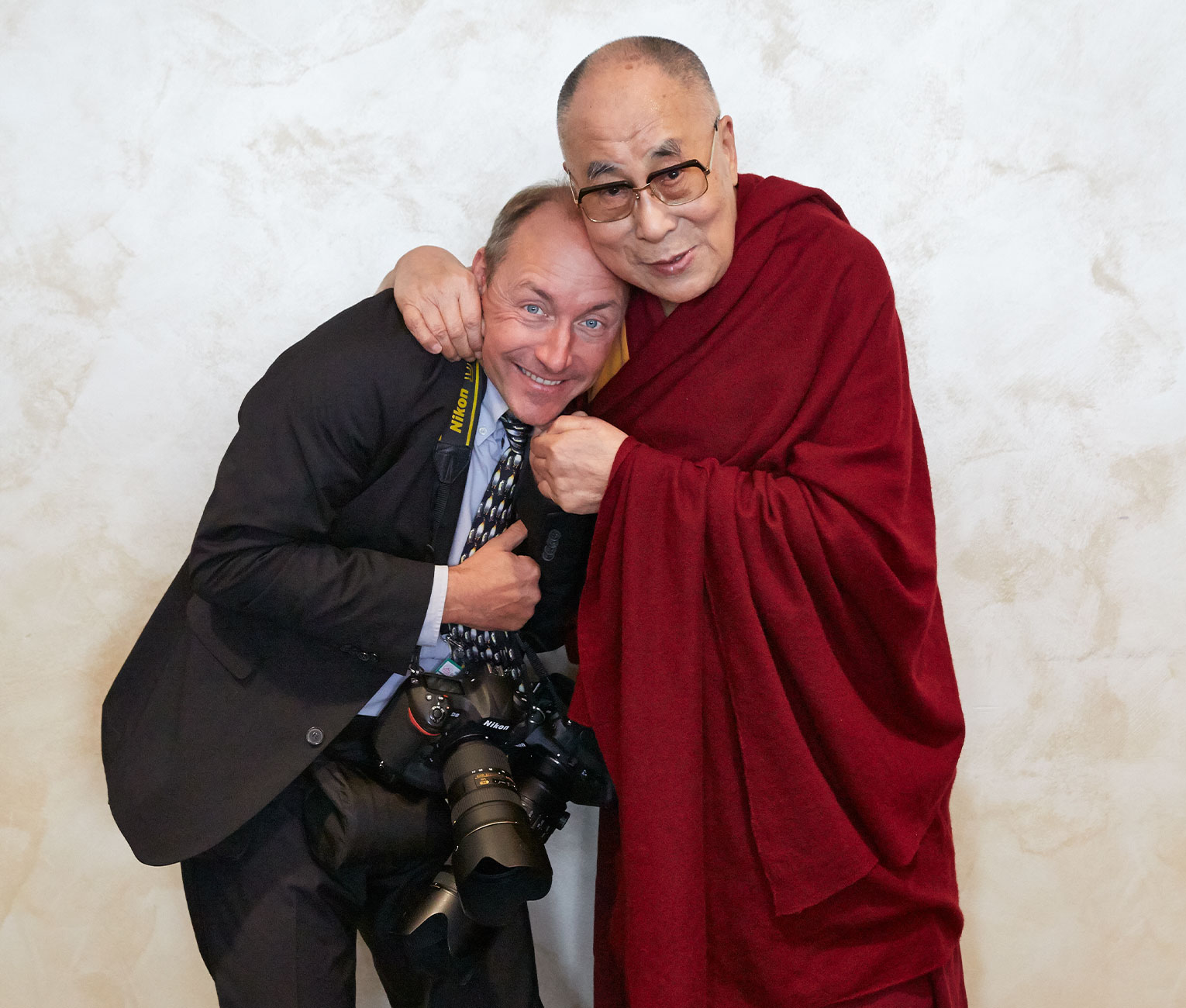
What ties his work together is not the pursuit of visual drama, but a consistent and thoughtful response to contemporary reality. Manuel Bauer photographs with a sense of responsibility – with a sharp awareness of what images can do, and a clear sense of when it is justified to release the shutter. His photo essays do not simply show the world as it looks, but as it resonates when one meets it with attentiveness.
His path into photography was not shaped by early ambition, but by a decision grounded in the concrete. Raised in Küsnacht, Bauer began training with photographer Thomas Cugini.
I CONSIDER HIM A TRUE FRIEND
The 14th Dalai Lama on Manuel Bauer
The camera became a means not only of creative freedom, but of discipline – a tool that required precision, preparation, and presence. He learned that a strong image doesn’t emerge from impulse, but from repeated return, research, and the ability to wait.
That precision has shaped his entire career. When Bauer first encountered the reality of Tibetan exile in the early 1990s, a relationship began that continues to this day. He has since followed not only the political fate of Tibet, but also the life of the 14th Dalai Lama. For over thirty years, he has documented the spiritual leader’s travels, public appearances, and conversations – but also private, quiet moments far from the public eye.
Manuel Bauer is neither a distant observer nor a figure absorbed by proximity. His images maintain a kind of focused presence that protects the dignity of the subject while revealing something essential. It is precisely this careful balance that gives his work its resonance.
A BOOK OF PHOTOGRAPHS AND A VISUAL RECORD OF TRUST
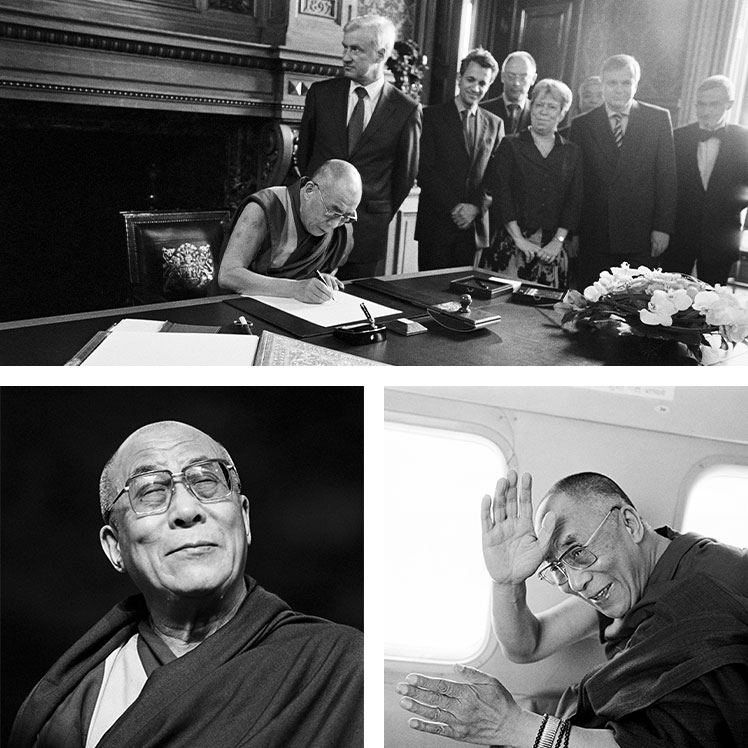
Bauer’s latest publication is more than a photo book. It is the outcome of a photographic relationship that has grown over decades – and offers rare insight into a global figure, not only in his public role but in private settings as well. The Dalai Lama, photographed over the course of more than thirty years, is not stylized here, but portrayed with clarity: as a spiritual teacher, a dialogue partner, a human being.
The volume brings together some two hundred photographs, many of them previously unpublished. The Dalai Lama is shown in varied contexts: on stage, in travel, during rituals – but also in states of stillness, transition, or inward retreat. The camera remains present, but not intrusive. It records, without appropriating.
What runs through the book is a quiet sense of rhythm. There is no visual arc pushing toward dramatic peaks. Instead, a calm sequence of moments accumulates into a portrait – not biographical in the strict sense, but a visual approach to a worldview, a way of being. Manuel Bauer’s images are shaped by a closeness that was never orchestrated, but allowed to unfold. One senses a mutual understanding between two individuals – one that never had to be verbalized. The Dalai Lama is not framed as a symbol, but as someone truly seen: lucid, composed, and at times marked by a lightness that seems to lift formal roles entirely. This quiet tension is what gives the book its tone.
The structure of the book follows key dimensions of the Dalai Lama’s work: spiritual teaching, interreligious dialogue, environmental responsibility, science, and education. A dedicated section is devoted to the Kalachakra ceremony – a ritual of deep significance, carefully documented both in photographs and accompanying text.
Yet it is in the transitions, the understated moments, that the book reveals its distinctive strength. When the Dalai Lama walks down a corridor alone, his head slightly bowed. When he sits in a space meant not for display but for reflection. Or when the reader senses his absence – not physical, but interior.
Bauer’s photographic approach allows for these interpretations. He does not assign meaning, nor does he explain. He trusts the reader’s eye – and intelligence. The image selection is precise but not didactic. It offers space, not instruction. This approach is supported by contributions from Thupten Jinpa, the Dalai Lama’s longtime translator, and journalist Christian Schmidt. Their texts do not serve as guideposts, but as reflective commentaries. The photography remains central, but never isolated.


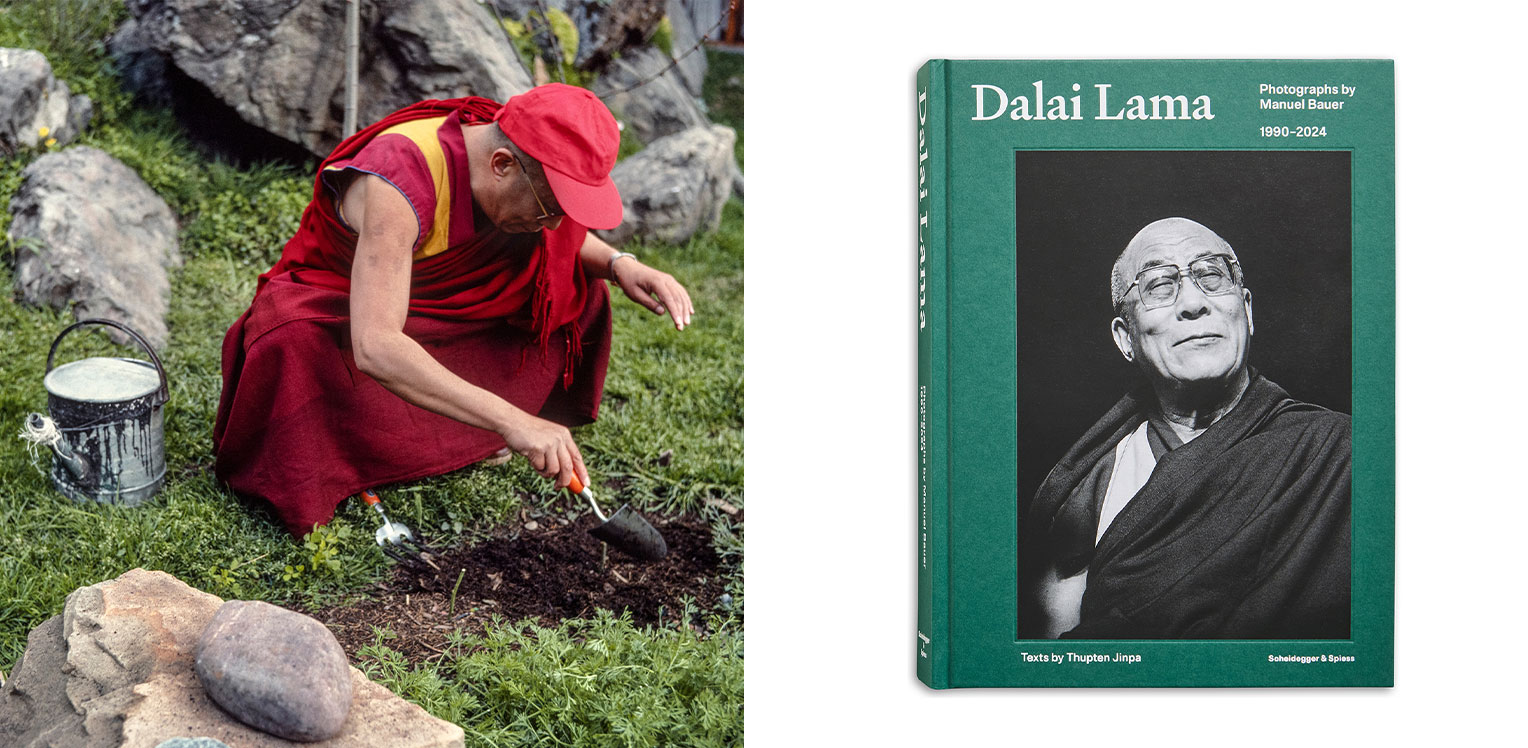
What makes this book remarkable is not only the access it reflects, but the restraint it maintains. It does not reveal what was private for the sake of revelation.
It avoids romanticizing. And yet, what unfolds is a decades-long trust – spiritual and personal – rendered visible through the lens.
In the end, the book leaves the impression of a work that does not conclude, but continues: as an intimate document, as a visual reflection on a life shaped by spiritual practice, and as a contribution to the quiet act of remembering.
Dalai Lama
Photographs by Manuel Bauer. 1990-2024
ISBN 978-3-03942-238-8
For Fine-Art-Prints contact the photographer:
bauer@manuelbauer.ch