
“At some point, there’s a five in front,” Brissa says with a smile. He means turning 50 – and less the number itself than the questions it prompted. How do you want to feel in ten, twenty or thirty years’ time? How long do you want to remain physically capable, mentally sharp, able to travel, work and exercise? And what can you do today to make that possible?
Brissa learned early on to understand his body through performance. He started playing rugby at the age of six and stopped at 21 because of injury. In between were years in which strength and endurance were not fitness goals but simply part of the sport. Later, that same ambition shifted into his professional life, where, as he describes it, it was less about pursuing a career in the conventional sense and more about proving something to himself. “Performance, performance, performance,” he says of that period.
During the pandemic, a childhood friend introduced him to David Sinclair’s book Lifespan. It became the starting point for what has since grown into four years of intensive exploration of longevity and, more specifically, the question of which aspects of ageing we can actually influence ourselves.
While Brissa has become far more critical of the way Sinclair moves seamlessly from preclinical hypotheses to supposed miracle molecules and sweeping promises, he still considers the book’s core message to be valid: exercise, sleep, nutrition, stress, social relationships – much of it sounds remarkably unglamorous at first. And that is exactly what Brissa likes about it. For him, health does not begin with a capsule or a supposed shortcut. It begins with everyday habits. “Start by treating your sleep as sacred,” he says at one point in our conversation.
For him, supplements come later. And that is precisely why they began to interest him. Brissa wanted to understand which compounds might actually be worthwhile, how well they had been researched, and at what doses they had been used in studies. He read scientific papers, compared publications and became increasingly immersed in ingredients and the evidence behind them.
“I’m 50 now, and the one thing I have neither the time nor the inclination to do is waste my life on bullshit. So before I start taking things for which there’s no evidence, I’d rather have a nice glass of water.” When assessing a supplement, he asks three questions: “Are there human studies? How robust are they? And what dosages are we talking about?”
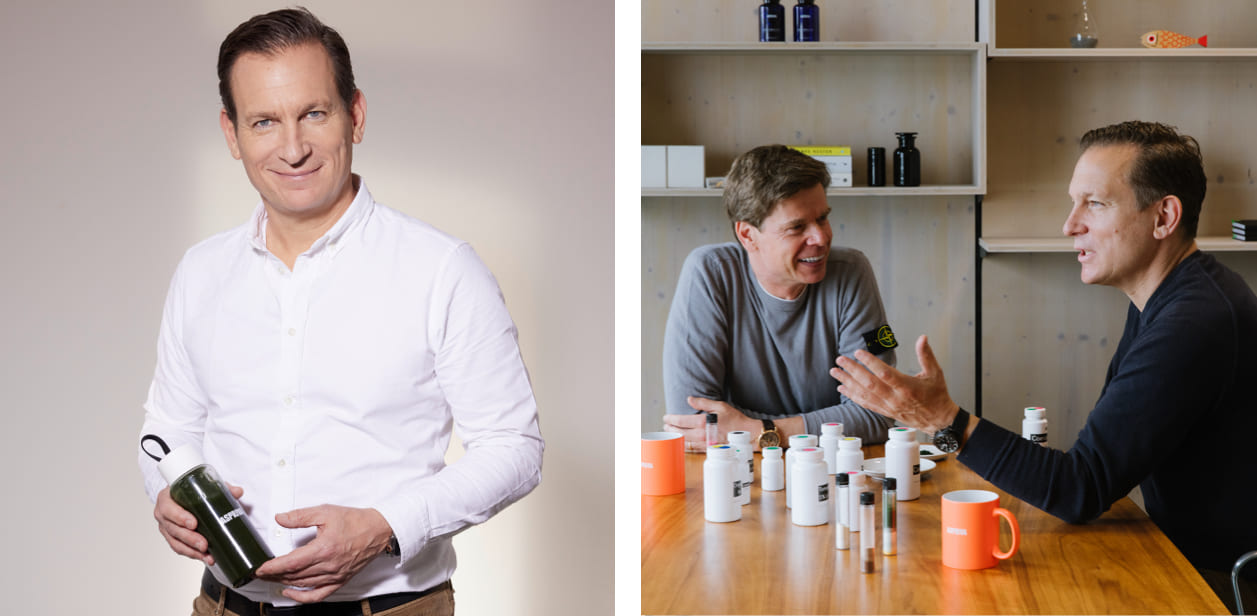
It was this scepticism that eventually led to ASPRIVA. Brissa had founded companies before, so he knew how to turn an idea into a business. At the same time, he seems to have understood from the outset that entrepreneurial experience is of little use when it comes to biochemical questions. Through a publication on curcumin, he came across Jan Frank, a professor at the University of Hohenheim. Brissa emailed him — and received a reply. That initial contact led to conversations, more experts joined the process, and together with his childhood friend Christoph Wild, Brissa embarked on a development phase that would last around three years.
Three years spent developing products that, ultimately, are meant to become an almost effortless part of everyday life. For Brissa, that is an important point. The aim was never to combine as many ingredients as possible. Instead, the same questions had to be answered again and again: Which substances make sense? At what dosages? What quality of raw materials should be used? How can sensitive ingredients remain stable? And how do you end up with something that is not only convincing on paper, but simple enough for people to actually use consistently over time?
“We could easily have taken ten shortcuts,” Brissa says, “but at no point were we willing to do that, because we said: then it wouldn’t be our product.” And the longer you speak with him, the clearer it becomes how much he sees the products themselves as part of his own ongoing engagement with health. He takes them himself, continues to scrutinise their formulations, speaks with scientists and keeps up with new research.
Brissa’s enthusiasm is palpable. In conversation, he jumps from biochemistry to rugby, from sleep to scientific studies, from dosages to entrepreneurship. He keeps reading, questioning and experimenting. And he has turned that curiosity into a company.


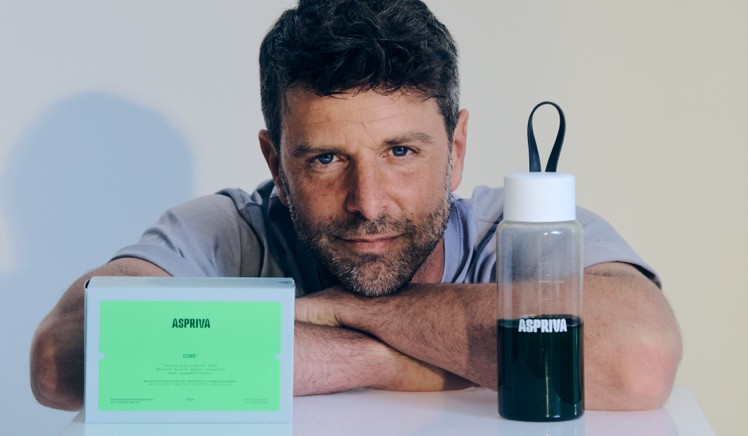
ASPRIVA did not begin with a ready-made business concept in search of a story. The order was the other way around: first came a personal question. Then came an intensive engagement with the research. And finally, the desire to develop products Brissa himself would want to take every day. To him, ASPRIVA is not a substitute for a healthy lifestyle; it is an addition to one. His personal hierarchy is clear: exercise, good sleep, a sensible approach to stress, social relationships and preventive healthcare come first. Nutrition comes next. Only then do supplements enter the picture.
That order makes his view of longevity refreshingly straightforward. The word itself is everywhere these days. Brissa is less interested in the idea of stopping aging than in the possibility of continuing to live the life you want for as long as possible. In research, this is often described as healthspan: the period of our lives during which we remain as healthy, independent and physically and mentally capable as possible. Brissa puts it in much more personal terms: he wants to have energy. He wants his body to stay strong and capable. He wants to be able to think quickly.
And one day, he wants to still be able to pick up his grandchildren.
You understand why that image matters so much to him when he talks about his parents. He was with both of them as they were dying. “At some point, it’s going to end anyway. The only question is how much time you want to spend in a state of frailty.”
It does not sound like a sad statement when Brissa says it. It sounds more like an explanation of why he thinks about health with such consistency. Because, in the end, he is surprisingly unconcerned with living for as long as possible. What matters is living well for as long as possible.
ASPRIVA does not promise to abolish aging. Instead, it stands for the idea of paying attention to your body early enough – and of seeing health as something we can, to a certain extent, actively shape.