
GREAT PLAINS – TRAVEL AS AN ART OF PRESERVATION
Their films – honoured with multiple Emmy Awards and a Peabody – have shaped how the world sees Africa. Yet their work is not simply nature documentary. It is an expression of deep connection to a continent whose diversity and fragility have defined their lives from the very beginning.
This devotion led them to found Great Plains Conservation in 2006 – an organisation that intertwines travel with conservation.
Today, Great Plains operates fourteen eco-conscious safari camps across Botswana, Zimbabwe, and Kenya, designed to offer profound nature experiences while directly supporting conservation projects.
Alongside it, the Great Plains Foundation was created to restore habitats, protect endangered wildlife, and strengthen local communities. What started as personal commitment has grown into a continent-wide network of initiatives with measurable impact.
FROM STORYTELLERS TO GUARDIANS
The Jouberts come from a world shaped by images. In their early years, they spent long stretches observing wildlife: lion prides, herds of elephants, big cats – documented not for quick spectacle, but for deeper understanding.
Over forty films, numerous books, and photography collections followed. As National Geographic Explorers-at-Large, they are now part of a global community of researchers and storytellers who carry knowledge about vulnerable ecosystems into the world.
But eventually, storytelling alone was no longer enough. “When we see species disappearing, we cannot simply keep filming. We have to act,” says Dereck Joubert.
From this conviction, Great Plains emerged – a model in which travel becomes the foundation for protecting nature.
GREAT PLAINS CONSERVATION – TRAVEL WITH IMPACT
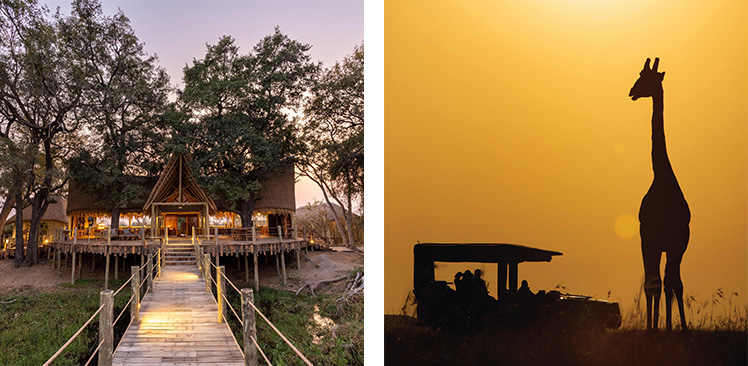
Entering a Great Plains camp means stepping into a place shaped by its surroundings. The structures are built from natural materials, powered by solar energy, and each site is chosen with the aim of respecting existing ecosystems.
Before a new camp is built, the Jouberts spend days and nights on the land. Not to assess a property, but to understand the environment: Where do animals pass? Where does the first morning light fall? How does the wind move?
Only then is a plan drawn.
This approach defines both the Réserve Collection – the signature, high-end camps – and the smaller, intimate properties of the Explorer Collection. In both, the same intention is present: to let guests experience Africa without disrupting its rhythm.
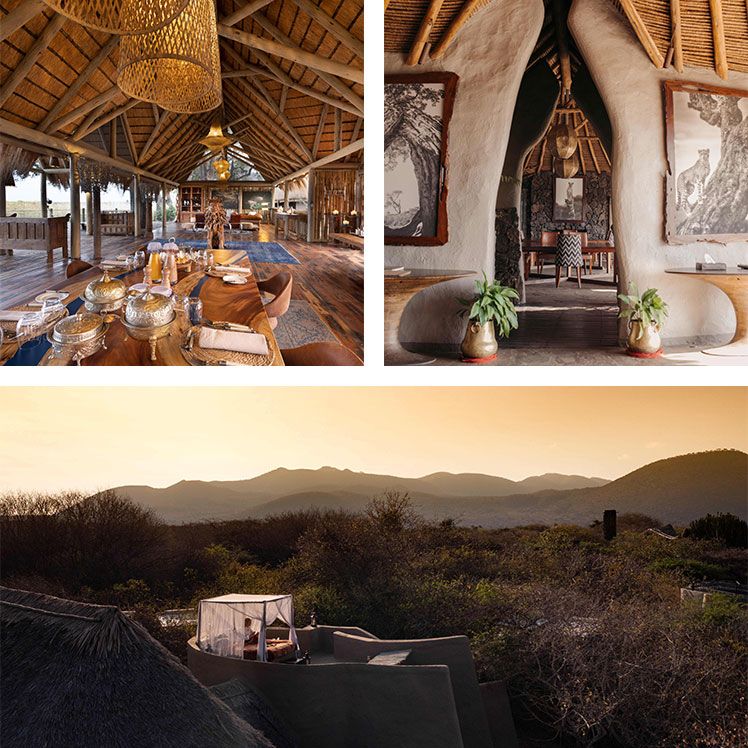
The architecture is deliberately understated. Canvas, timber, leather, earthy tones – materials that blend naturally into their surroundings. The result is not a curated exotica, but a sense of belonging: you step inside, and the landscape remains the true protagonist.
MARA TOTO TREE CAMP
In Kenya’s Maasai Mara lies Mara Toto Tree Camp, tucked into the crowns of ancient ebony trees along the Ntiakitiak River. The four tented suites, raised on strong wooden stilts, feel like part of the forest itself.
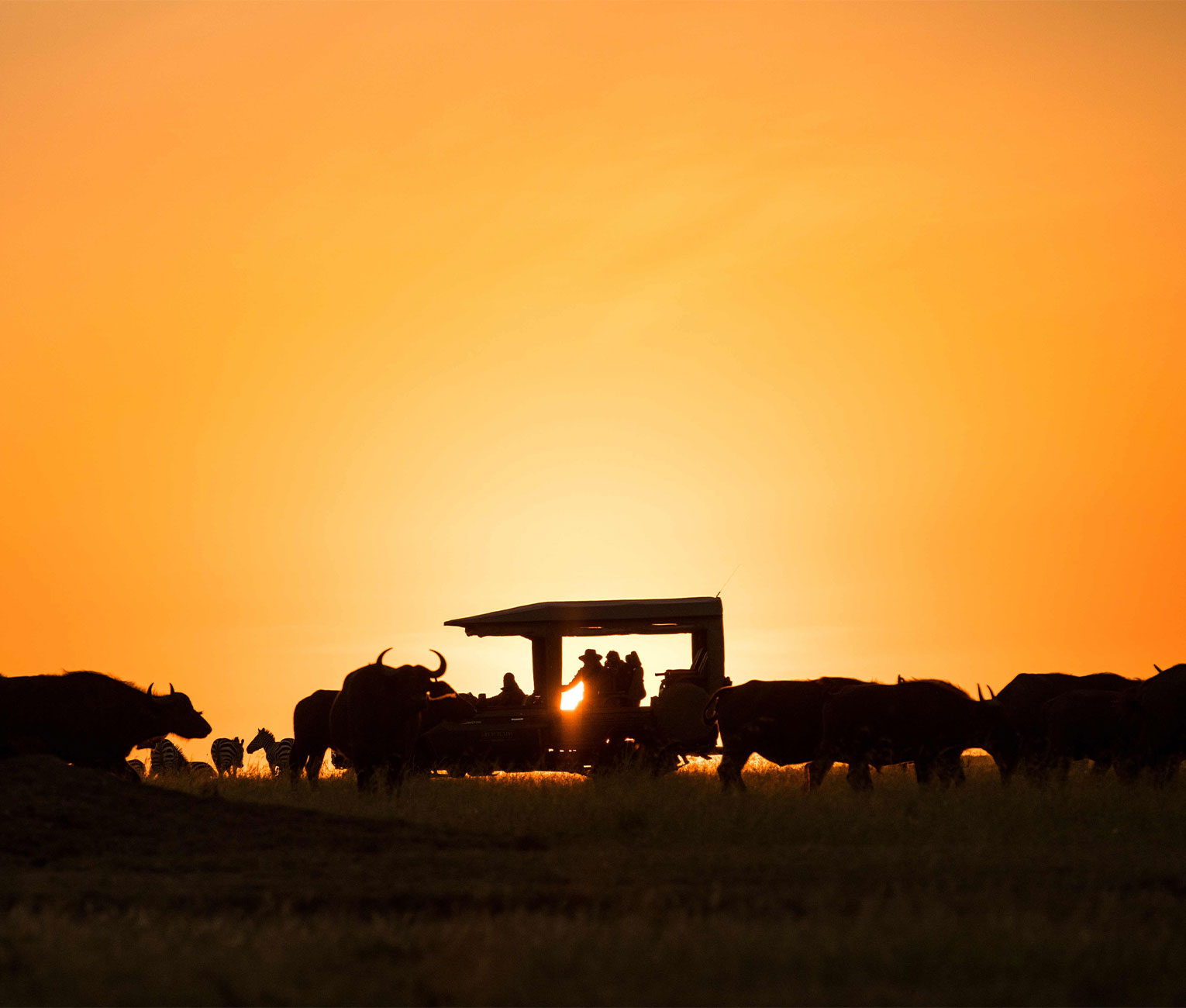
The day begins with light filtering through canvas walls. Guided drives lead out into the Mara North Conservancy and the Maasai Mara National Reserve, where the famous annual migrations take place.
Here you encounter what the Jouberts have spent decades filming: the great movement of the savannah, the interplay of predators and herds, the balance between stillness and energy.
In the afternoon, you return to camp. The light softens, wildlife draws near. Each suite includes professional camera equipment – a gesture from Beverly Joubert, encouraging guests to develop their own perspective.
Behind Great Plains lies not a tourism system, but a structure designed to strengthen nature and the people who live alongside it. The Great Plains Foundation runs long-term programmes across several African countries.
Among the most notable is Rhinos Without Borders: 87 rhinos have been relocated from high-risk areas into secure reserves, where they are protected and monitored. Many have since given birth – living proof that protection works.
The Big Cats Initiative, originally created with National Geographic, supports over 150 projects in 27 countries. Its aim: to halt the decline of lions, leopards, and other big cats through educational outreach, strategic fencing, research, and providing field teams with the equipment they need.




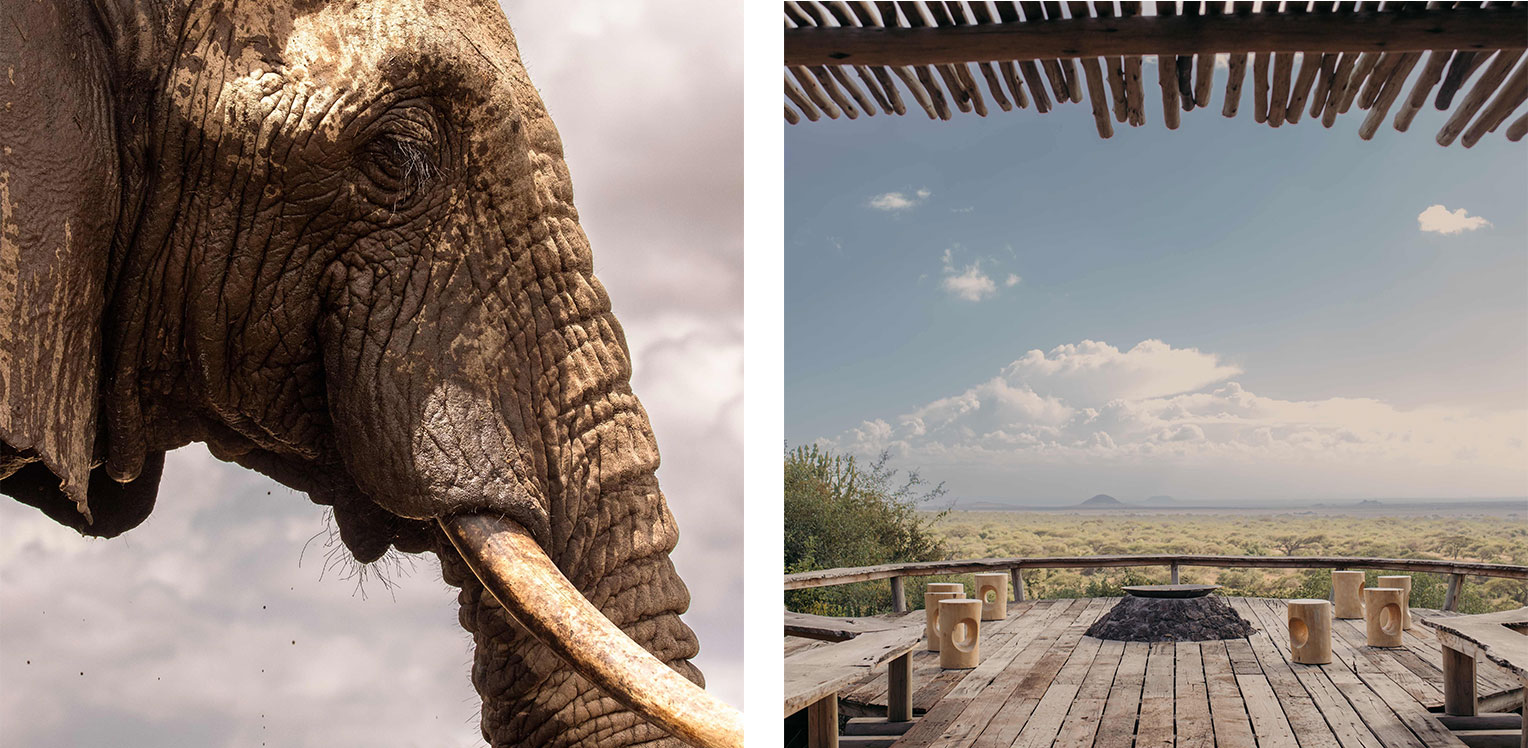
Through Solar Mamas, women from rural communities are trained as solar engineers. After six months of instruction – delivered in partnership with Barefoot College in India – they return home to electrify their villages, opening doors to light, safety, and economic opportunity.
Project Ranger strengthens those working daily on the frontlines of conservation. Since its launch, more than 200 rangers across seven countries have received support – equipment, salaries, training, and technical resources.
Together, these efforts show how broadly the Jouberts’ vision reaches: protection for wildlife, empowerment for communities, and stability for those safeguarding the land.
A DISTINCT UNDERSTANDING OF LUXURY
Great Plains offers remarkable comfort – but not to showcase abundance. Instead, it creates space. Space to slow down, to look closely, to sense the world beyond noise. What you experience here is built on time, nature, and attentiveness: the approach of an elephant, the outline of the moon above the plains, the conversation with a guide who reads the landscape as if it were a familiar text.
It is a form of travel that places guests not at the centre, but in relation to their surroundings. For people who have been everywhere, this often becomes something rare: focus.
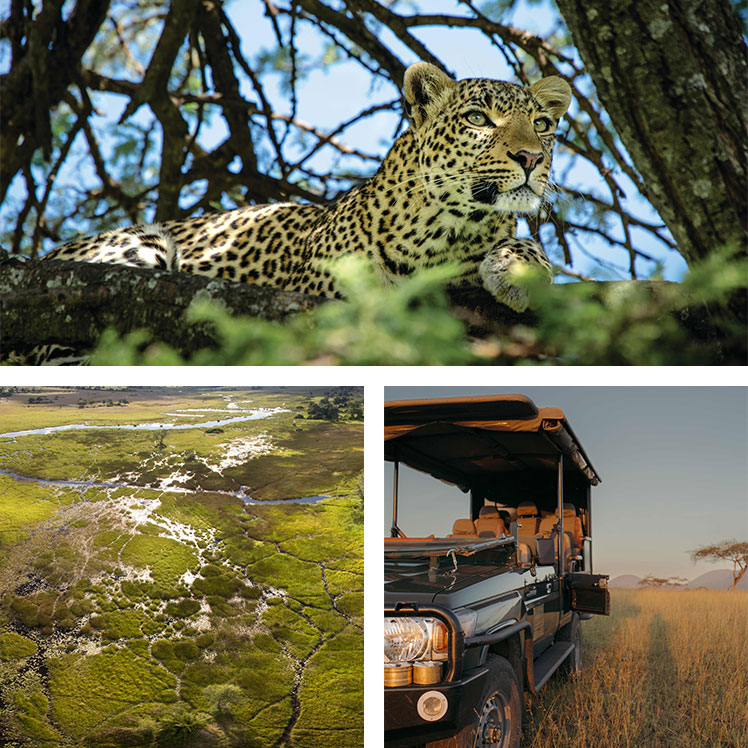
It is not only the wildlife that moves you. It is the atmosphere of a camp powered entirely by solar energy. The understanding that every stay directly funds conservation work. The knowledge that what surrounds you is irreplaceable and enduring.
Those who leave a Great Plains journey depart without souvenirs. They carry something else: the gaze of a lioness striding across the plains, the sound of a hippo at night, the awareness that they have witnessed something precious – and that it will continue.