
The Dutch place great value on a healthy work-life balance, and nowhere is this more evident than in Amsterdam.
Work schedules are often flexible, with many people working part-time or enjoying generous remote work options. Life unfolds on the streets, in parks, and along the canals – whether it’s a morning coffee at a small sidewalk café or an evening stroll along the Prinsengracht. Here, time is not just a measure of productivity but a resource deliberately invested in social connections, culture, and nature.
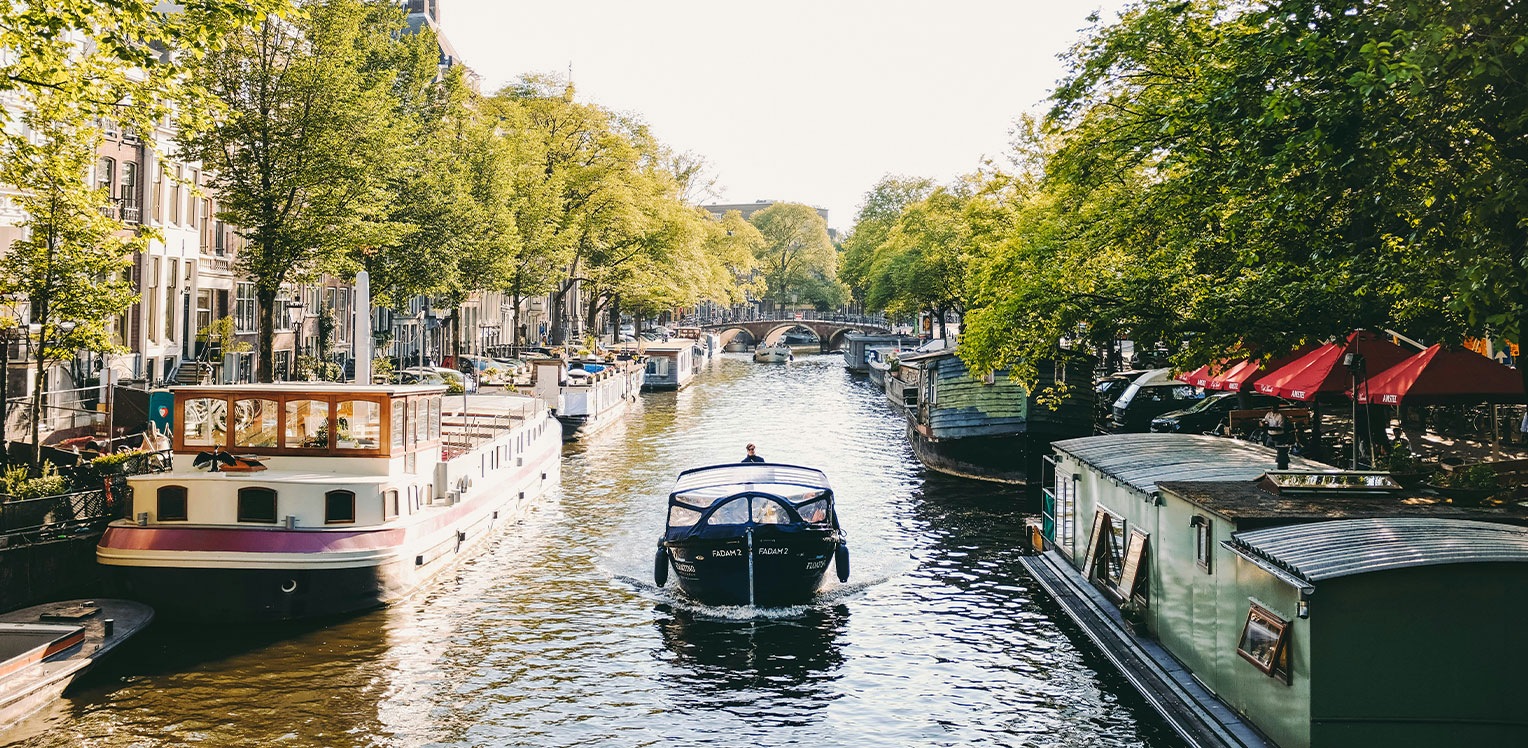
The canals of Amsterdam are more than a tourist attraction – they are an integral part of daily life. Many locals own boats, using them as floating living rooms where they unwind with friends after work. The setting sun reflects off the water’s surface as houseboats sway gently – a scene that is deeply embedded in the city’s identity. The water also provides a natural sanctuary, offering a moment of peace in a vibrant metropolis.
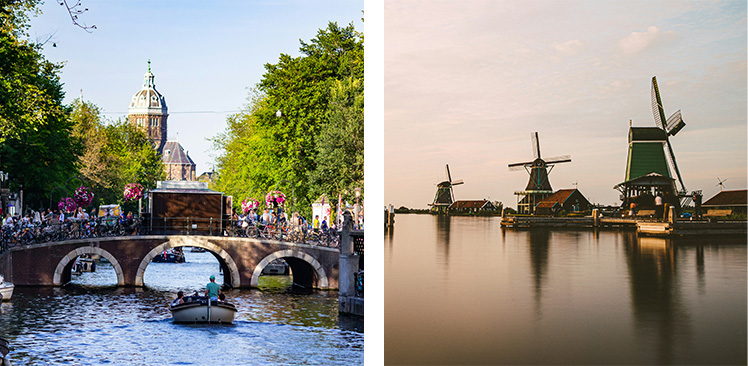
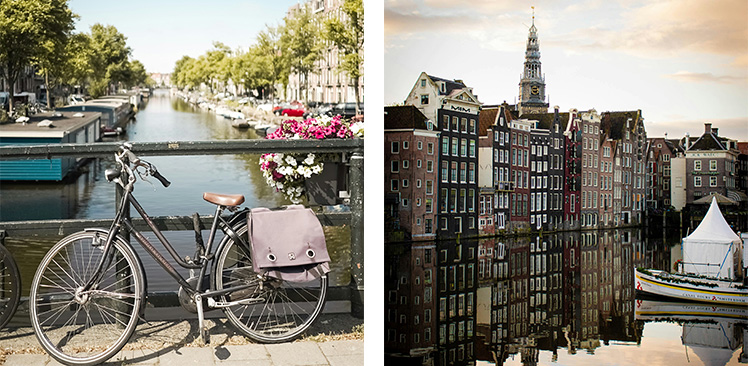
Unlike in most cities, cars do not dictate the rhythm of life here – bicycles do.
Over 60% of all trips within the city are made by bike. Children are transported in specially designed cargo bikes, professionals commute in suits, and even elderly residents cycle effortlessly through the narrow streets. Amsterdam’s cycling culture reduces noise and pollution while fostering a sense of freedom and independence.
It is a central aspect of the city’s relaxed lifestyle. No surprise, then, that Amsterdam is one of the world’s most bike-friendly cities, boasting over 500 kilometers of dedicated bike lanes and more bicycles than residents.
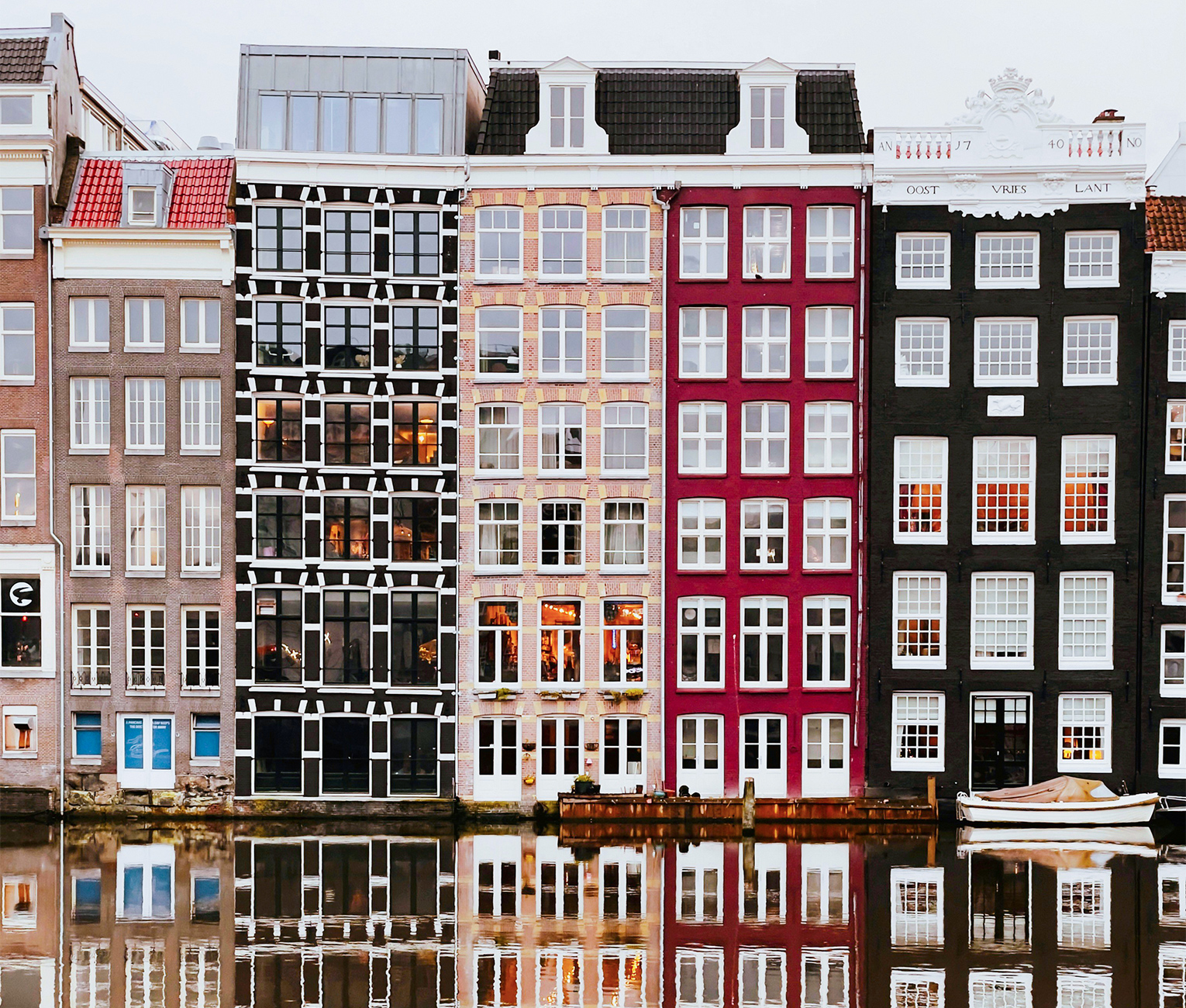
Known as the Venice of the North for its network of canals and picturesque architecture, Amsterdam is densely built, yet it never feels overcrowded thanks to its abundance of green spaces. The Vondelpark is the city’s natural heart, where joggers, picnickers, and musicians come together. Just outside the city, the Amsterdamse Bos offers forest trails and small lakes, while the Amstelland region to the south features open fields, traditional farms, and grazing cows – a rural escape just a short bike ride from the city center. And then there are the hidden oases, like Ilperveld to the north, where rare birds nest and nature remains untouched.


Amsterdam’s museums are world-renowned, but the city’s cultural pulse extends far beyond Rembrandt and Van Gogh. Art thrives in small theaters, jazz clubs, and contemporary galleries. Street art decorates building facades, musicians perform on street corners, and many cafés transform into venues for poetry slams or intimate concerts by night.
Notably, culture in Amsterdam is accessible to all. Many events are free or require only a small donation. Experimental art spaces like the Moco Museum and underground galleries offer alternative perspectives on the city’s creative scene. This democratic approach to culture ensures that art remains a vibrant and inclusive part of everyday life.
To reduce Amsterdam’s cuisine to poffertjes and bitterballen would be a mistake. Shaped by its international character, the city is home to a diverse food scene: Indonesian rijsttafels, Syrian mezze, Japanese izakayas, and innovative vegan street food concepts. Markets like the Albert Cuyp Market offer fresh regional produce, while artisan bakeries specialize in sourdough bread and handcrafted pastries.
In recent years, sustainable dining has also taken root, with restaurants growing their own ingredients or work ing exclusively with seasonal products. This culinary evolution reflects Amsterdam’s broader commitment to conscious living — where quality, ethics, and enjoyment go hand in hand.
In the Dutch capital, openness and tolerance are not just ideals – they are a way of life. People from all cultures and backgrounds don’t just coexist; they connect. Amsterdam’s famous directness may take some getting used to, but it stems from honesty and a refreshingly down-to-earth mentality. Whether you’re a newcomer or a life- long resident, you are welcomed into the city’s fabric – so long as you’re willing to embrace it.
This mindset extends into the neighborhoods, where community-driven initiatives flourish. From urban gardens to open workshops, residents actively shape their city. The result is a place that feels both dynamic and deeply human.
Life in Amsterdam means being part of a city that puts people first. A city that seamlessly blends urban moderni- ty with nature, culture, and social connection. Whether cycling through the canal districts, reading on a waterside dock, or sharing a meal in a cozy local restaurant, Amsterdam invites you to experience life with intention. And that is what makes it truly livable.