
American diners are more than just places to grab a burger, pancakes, or a steaming cup of coffee. They are a cultural institution, shaping American society for more than a century.
They tell stories of hard work, of the American Dream, of endless nights and long conversations at the counter. From the first mobile food carts of the 19th century to the golden age of the 1950s and today’s modern interpretations in an increasingly digital world – diners have endured. But how did it all begin?
THE BIRTH OF DINER CULTURE
The roots of diners trace back to the late 19th century. In 1872, a newspaper vendor named Walter Scott from Rhode Island start ed selling sandwiches and coffee from a horse-drawn wagon at night. His idea was so successful that other entrepreneurs quickly followed suit. The first lunch wagons were born – simple, mobile food stands serving workers quick and affordable meals. It wasn’t long before these wagons evolved into permanent establishments. Jerry O’Mahony, one of the most famous diner manufacturers, designed the first stationary diner in 1913. Long and narrow, it was inspired by railroad dining cars.
In fact, the term diner comes from dining car, a nod to the luxurious train carriages of the great railway lines.
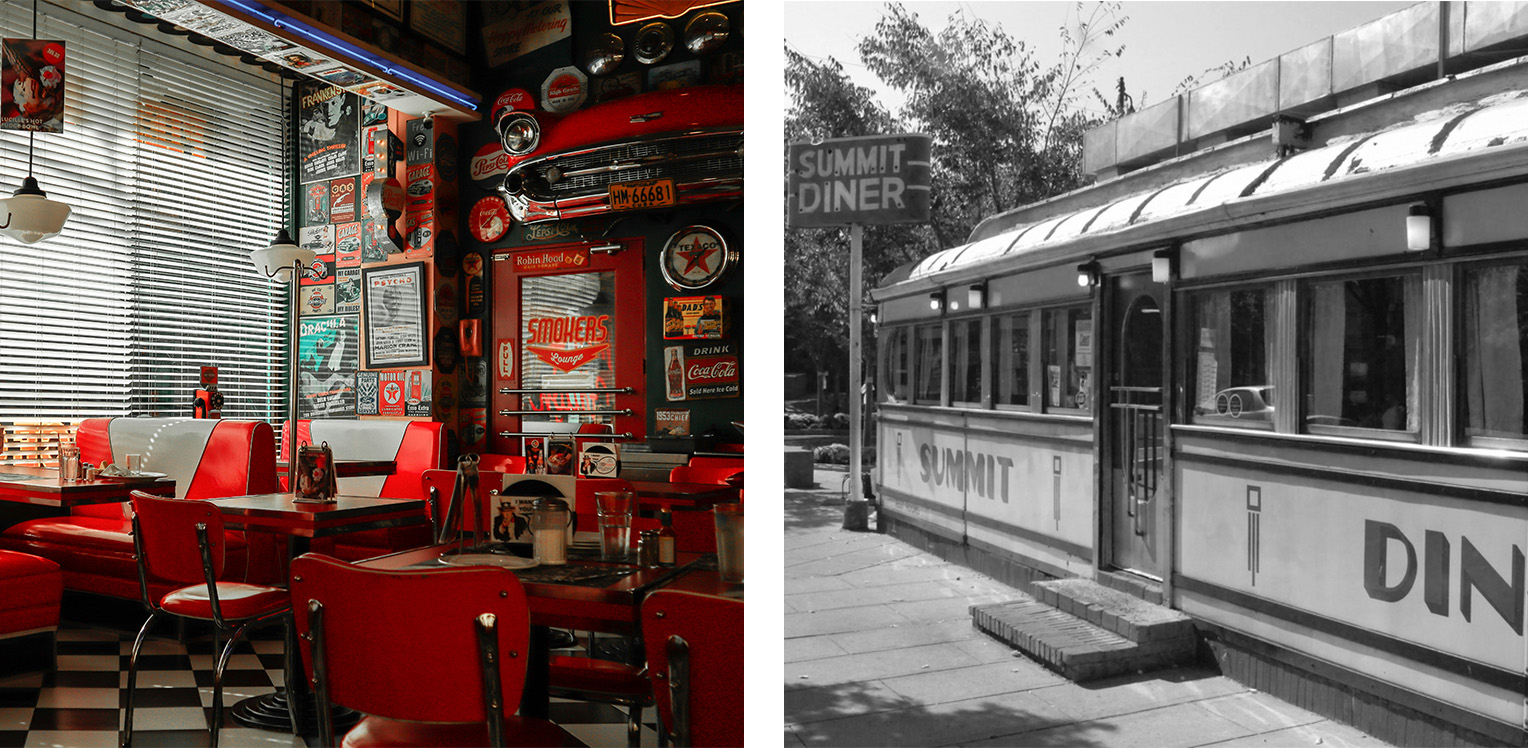
With the post-World War II economic boom, diners entered their golden age. In the 1940s and 1950s, they became symbols of a fast-paced, modern society.
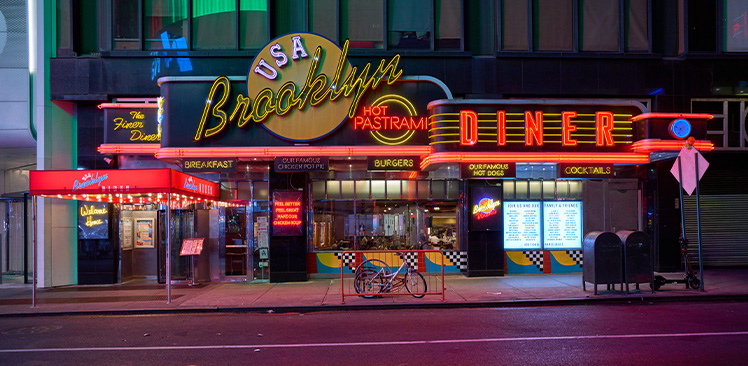
Neon lights, jukeboxes, waitresses in crisp aprons – diners became social hubs, a meeting place for everyone: workers, businesspeople, teenagers after school, and night owls on their way home.


A MIRROR OF SOCIETY
Diners are more than just restaurants. They are places of connection, of democracy. Here, bankers sit next to taxi drivers, artists next to construction workers. People come in for a quick snack – and often stay for a long conversation.
Especially in times of crisis, diners have played an important role. After the 9/11 attacks, many New Yorkers found comfort and community in their favorite diners. These places offered a sense of normalcy in a chaotic world. During the 2008 financial crisis, diners experienced a resurgence – affordable, simple meals became more important than fine dining.
THE FUTURE OF AMERICAN DINERS
Today, diners stand at a crossroads. Large fast-food chains have made it harder for traditional diners to survive. But some are fighting back, focusing on healthier ingredients, sustainable concepts, and a modernized atmosphere without losing their classic charm.
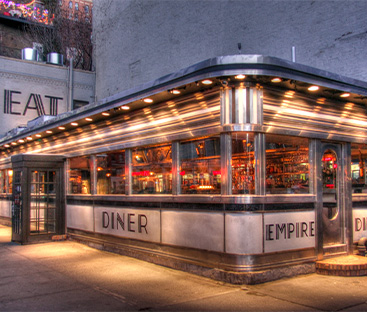
Empire Diner is a perfect example of this evolution. It preserves its historical character, remains an urban icon, yet keeps up with the times. The menu now includes not only classic burgers but also vegan options and modern interpretations of American favorites.
One thing is certain: as long as people crave a warm meal, good conversation, and a touch of nostalgia, diners will not disappear. They will remain a cornerstone of American culture – a gleaming chrome façade in a world that never stops changing.
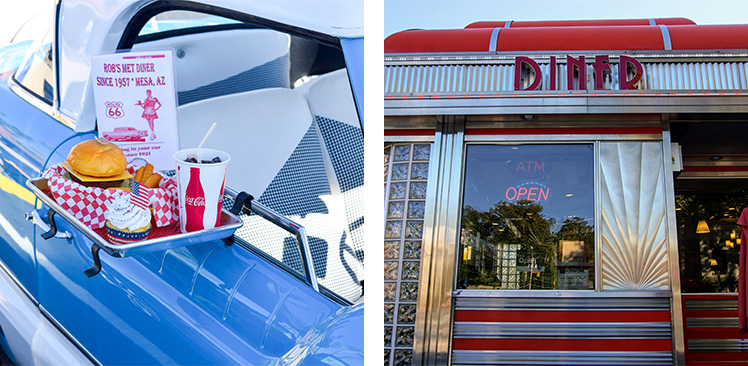
Beyond Empire Diner, there are countless other diners deeply rooted in American culture, playing a vital role to this day:
Palace Diner (Biddeford, Maine): One of the oldest surviving diners, built in 1927. With its charming original décor and classic menu, it has secured its place in diner history.
Ruth’s Diner (Salt Lake City, Utah): In business since 1930, known for its cozy atmosphere and legendary homemade biscuits. It is Utah’s second-oldest restaurant.
Florida Avenue Grill (Washington D.C.): Opened in 1944, it’s considered the oldest soul food restaurant in the world, playing a significant role in African American culinary culture.
Tom’s Restaurant (New York City): Made famous by the TV series Seinfeld, this diner is a true pilgrimage site for fans and tourists alike.
Twede’s Cafe (North Bend, Washington): Gained worldwide fame as the Double R Diner from Twin Peaks and still serves the legendary cherry pie from the show.