
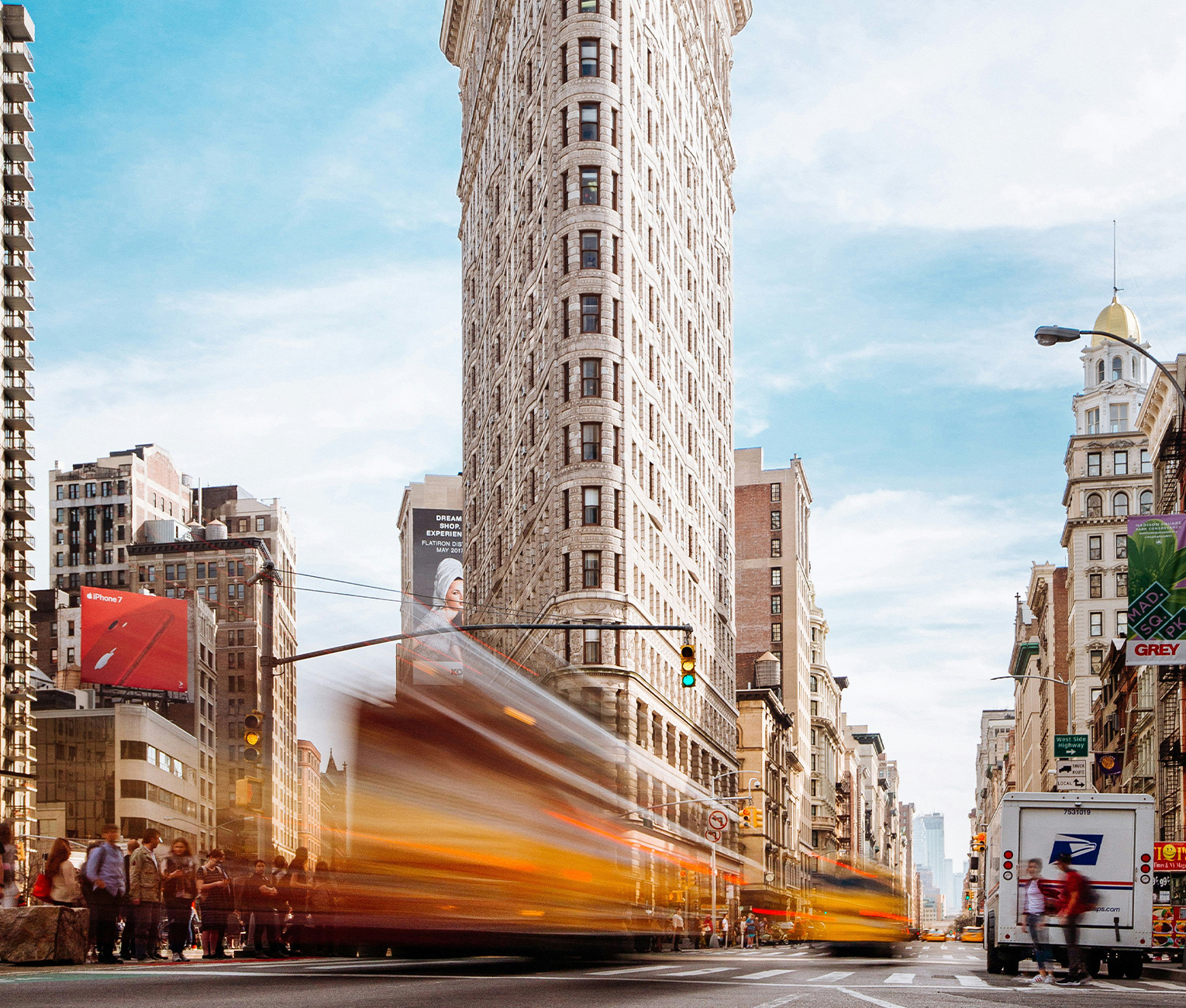
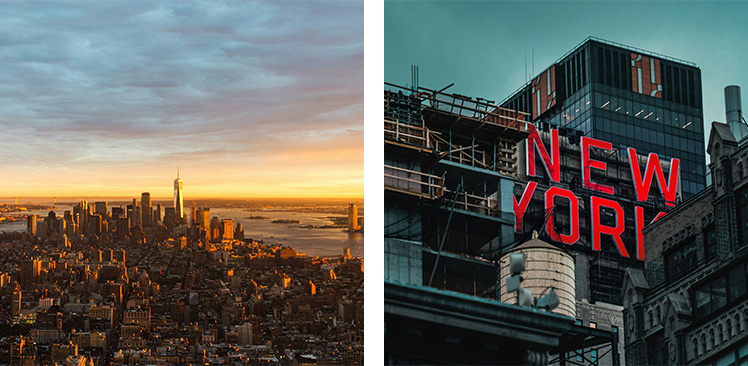
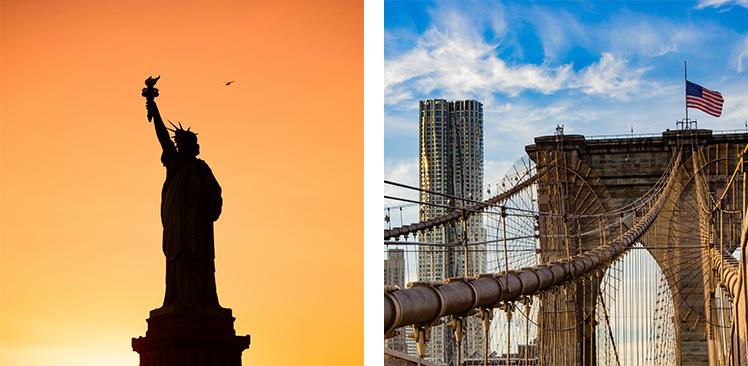
The breathtaking skyline is the first thing that comes to mind when people think of New York. But it’s more than just a panorama of glass and steel – it’s a symbol of ambition, dreams, and human ingenuity. Every glance at the Empire State Building, the Chrysler Building, or One World Trade Center tells a story of relentless energy. Yet, New York isn’t just skyscrapers. It’s also the his toric brownstones of Brooklyn, the intricate facades of Greenwich Village, and the unexpectedly lush courtyards of Harlem that complete the urban mosaic.
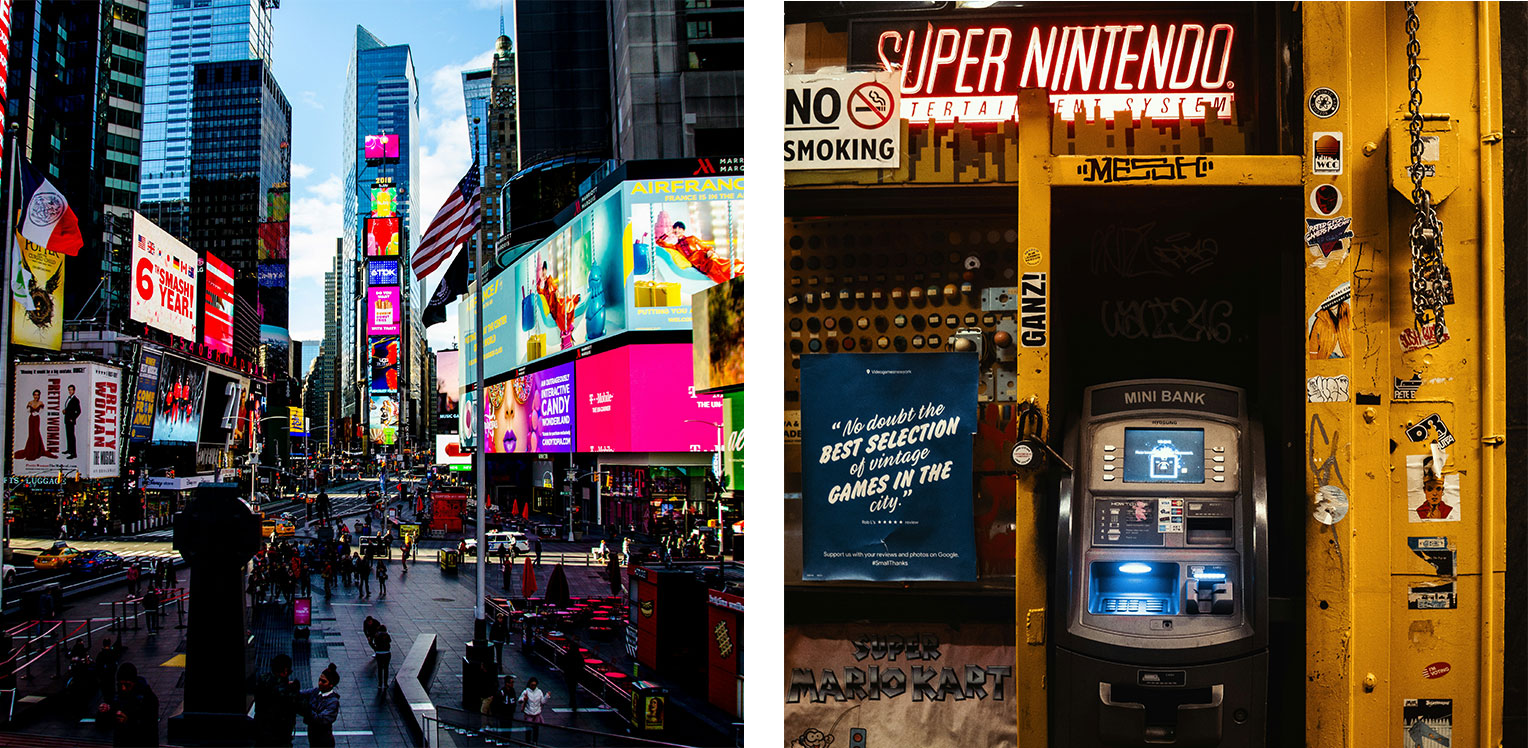
New York thrives on extremes. It can be loud, chaotic, overwhelming – but that’s exactly what makes it so alive. Times Square is the neon-lit heartbeat of this uncontainable energy, where billboards tower like modern cathedrals. Just a few streets away, however, the doors of Bryant Park open to a different world, where people play chess on their lunch breaks while the city hums around them. This coexistence of intensity and tranquility defines the rhythm of New York.
Yet the true soul of the city isn’t found in its skyscrapers or its landmarks – it’s in its people. More than 180 languages are spoken here, and every culture has carved out its own corner. Chinatown, Little Italy, Harlem, the Jewish communities of Brooklyn – they all carry their histories into the present. And yet, they are not isolated enclaves but tightly interwoven neighborhoods that influence and inspire one another. In New York, people don’t just live side by side – they live together.
This diversity is reflected nowhere more vividly than in its food scene. Anyone who thinks New York is just pizza and bagels has barely scratched the surface. The city is a culinary kaleidoscope: from Korean BBQ joints in Flushing to Ethiopian restaurants in Harlem to tiny Latin American eateries in the Bronx. Michelin-starred restaurants and hole-in-the-wall food stalls both command cult followings.


New York eats around the clock – with a passion that guarantees something for everyone.
But New York isn’t just a feast for the palate; it’s a feast for the mind. The museums are world-class – MoMA, the Guggenheim, the Met. But some of the city’s greatest art isn’t found in galleries. It’s on the streets: the murals in Bushwick, the improvisations of jazz musicians in the parks, the underground exhibitions in the warehouses of Queens. The city itself is a massive studio where creativity doesn’t just exist – it thrives.
It’s easy to reduce New York to its glittering surface. But what truly makes it extraordinary are its secrets and quirks. The hidden rooftop gardens atop Rockefeller Center, the Whispering Gallery in Grand Central Station where voices travel in impossible ways, the haunting ruins of the Renwick Smallpox Hospital on Roosevelt Island – remnants of a past that shaped the present.
And then, of course, there are the New Yorkers themselves. Blunt, sometimes even rude – but always real. They don’t waste time with small talk, but if you earn their attention, you’ll find some of the most honest and engaging conversations imaginable. They are restless but resilient. They have opinions – strong ones – and they don’t shy away from a debate. And despite the city’s relentless pace, one unspoken rule remains: when someone needs help, they’ll get it. A lost tourist asking for directions, a stranger who trips on the subway – there’s always a hand to pull them back up.
New York is a paradox. A city that feels insurmountable one moment and like the home you’ve been searching for the next. It is a city for dreamers and doers, for artists and analysts, for those who don’t fear chaos but embrace it as part of the beauty. To live here is to reinvent yourself over and over, to take on challenges and still appreciate the countless small wonders hidden in everyday life.
And that’s what makes New York one of the greatest cities in the world.