

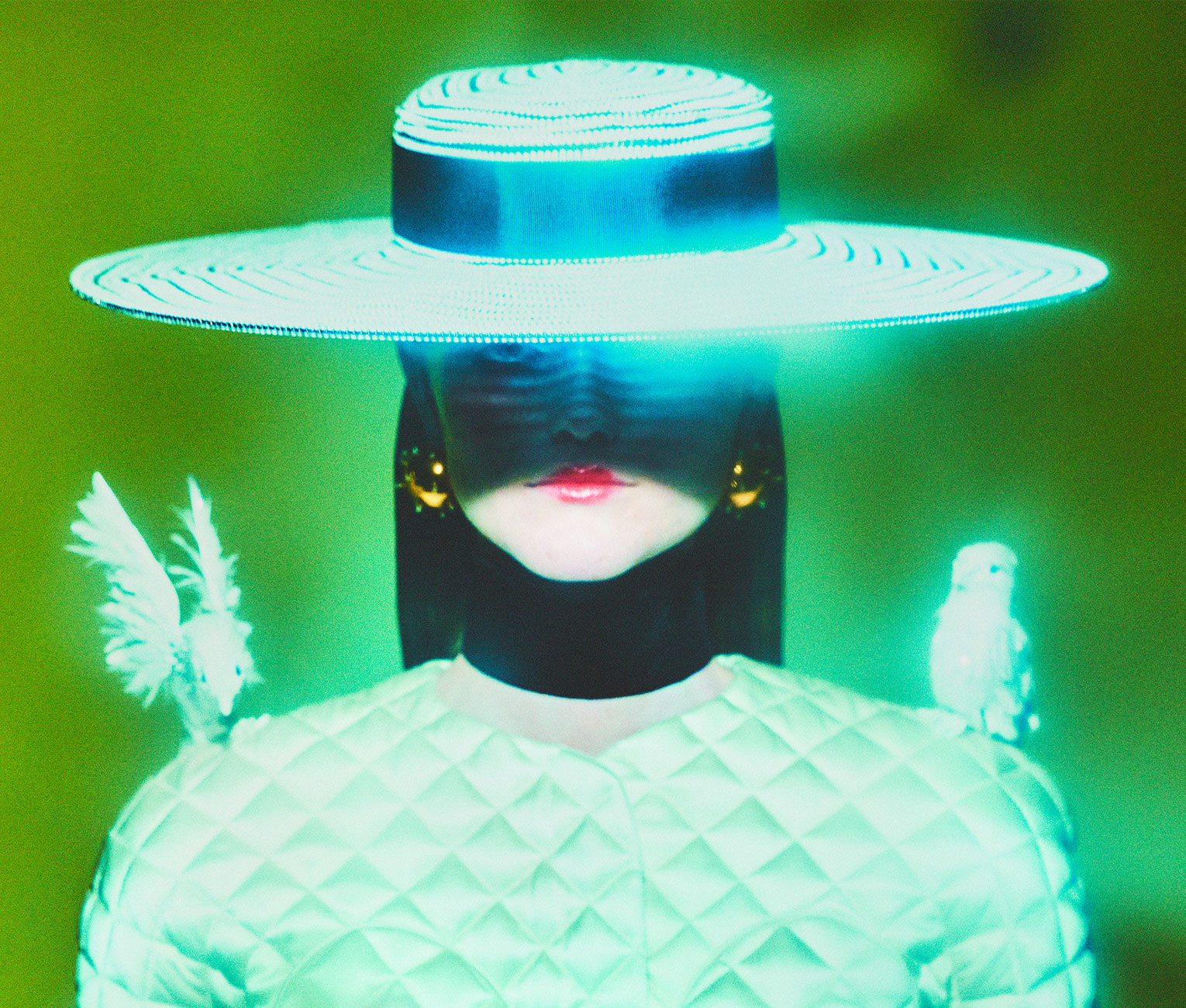
It was the evening before, somewhere among the lights of Berlin’s Friedrichstadt-Palast. In the middle of the crowd, Kristian Schuller appeared — a face AVIAIR Editor- in-Chief Sabine Kühlwetter-Meiers had only known from photographs. A brief, unexpected encounter, carried by a disarming warmth. The thought of meeting him for an interview the next day suddenly felt different – infused with a quiet anticipation that lingered.
The following afternoon, we meet Kristian Schuller on the set of “Germany’s Next Topmodel.” Somewhere between spotlights, a large crew and constant movement. Before the cameras start rolling, he makes time for us, and Sabine Kühlwetter-Meiers finds a calm corner with him. He puts his camera aside, open, warm, attentive — a wry smile on his face and a spark of anticipation that makes him instantly approachable.
Katrin Hohberg, his long-standing manager, made this conversation possible — she knows his rhythm, his precision, his ease. And she was right: the moment the conversation begins, something unfolds that can’t be planned. Kristian Schuller speaks about his work, about the person in front of the lens — and about what happens when the two meet.
Shortly before he has to return to the set, he asks the AVIAIR Editor-in-Chief to step in front of the camera — a spontaneous selfie experiment, a small reversal of roles. For a moment, the interviewer becomes the portrait.
Born in Romania and having moved to Germany with his family at a young age, Kristian Schuller now works between Berlin and New York.
He studied fashion design under Vivienne Westwood and photography under F. C. Gundlach at Berlin University of the Arts. It was there that he met Peggy – now his wife – who also studied fashion design and trained under Vivienne Westwood. The two continue to work closely together: Peggy regularly styles his photographs and remains a steady part of his creative world. His visual language – opulent yet precise – shapes international magazines, campaigns and exhibitions. His current exhibition "Pictures", previously shown at the Kunstmuseum Potsdam, spans works ranging from powerful, theatrical compositions to quiet black-andwhite portraits – a tension between glamour and origin, between stage and memory. From January to March 2026, "Pictures" will also be presented at the House of Photography in Stockholm.
AVIAIR: Sitting here with you, while the set is being prepared outside, there’s a sense of calm about you despite everything happening around us. What do you need, as a photographer, to stay alert and connected — the noise, or the quiet?
KRISTIAN SCHULLER: I need both. I’m someone who recharges by being around people. If I were too far removed — somewhere out in the countryside — I’d feel like I was losing touch. I need to see what’s happening out there. The faces, the styles, the language of the street. That keeps me awake. I always say: if I spent the whole day just sitting at my computer, I’d probably still be shooting trousers far too narrow, simply because I wouldn’t notice they’ve long gone wide again. That little, sometimes annoying urban hum — I need that.
So closeness to that movement is, in a way, also closeness to the zeitgeist?
Yes, but not in a fashion-trend sense. It’s more the contact with people that inspires me. I watch how they move, how they speak, how they present themselves. That’s my resonance chamber. And still, I need moments of distance — otherwise I lose perspective. But the balance happens on its own. I withdraw when the images get too loud.
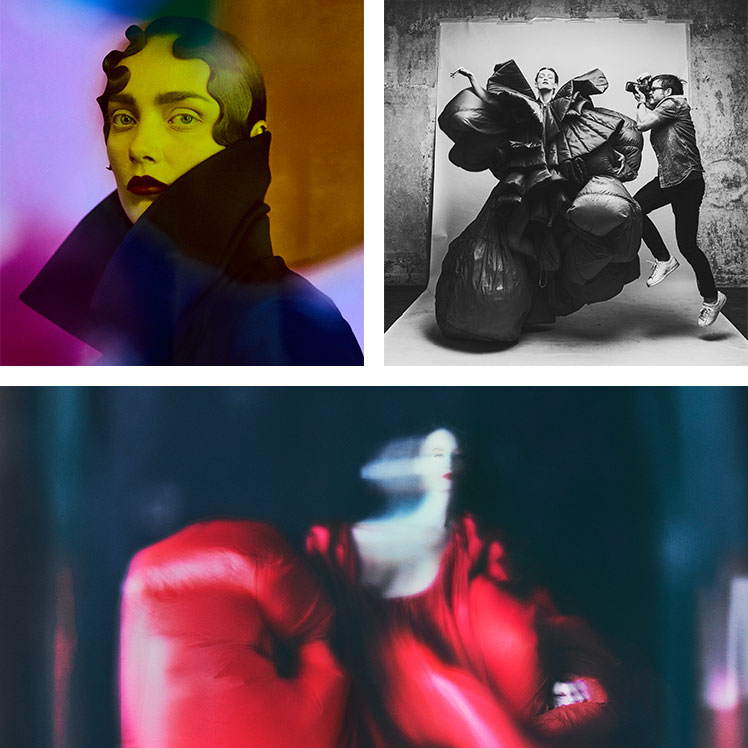
One line of yours has stayed with me: “ Every portrait is a rendezvous with a stranger.” What happens in that moment?
It really is a rendezvous — every time. You meet someone you don’t know, and you have very little time. You have to create a closeness that is real, even if it stays fleeting. I love that intensity. My father was a filmmaker. In film, everything takes forever before it moves. Photography is more direct. You come, you meet, you make. And you have to be ready — for chance, for rupture, for the moment.
These encounters take place in such a short, focused space. Is there something, amid all this spontaneity, that gives you grounding — something you can always rely on?
Yes — the craft. (laughs) I distinguish between duty and flourish. Duty is the craft: light, technique, planning. Flourish is the moment that goes beyond it. A look, a gesture, a movement — suddenly everything aligns, and you know: this is it. And it has to happen. For us, there isn’t the option of something not working. That’s what sets us apart from artists in a studio — we have to deliver. But that’s also the thrill: you work with control while searching for the unforeseen.
Your images bring together people from very different worlds — villagers, actors, models. Does it make a difference whether the person in front of you is famous or not?
The difference is less in the work than in the attitude. Unknown people often arrive open, curious, without an agenda. They allow themselves to be guided, they’re present. Celebrities come with a story, an image they have to protect — understandably so. But that’s what makes it interesting. Many of my most well-known commissions only happened because someone had seen my personal work.
I remember a shoot with a young unknown girl — her body painted like a zebra, standing before a wall painted the same way. A very strong, free image. Shortly after, the phone rang: “We want exactly that — but with a famous actress.” And that’s the thing: you can’t simply copy a concept. A person is not a setting. If you try to push someone into a story that isn’t theirs, it breaks. My task is to find the language of the person in front of me — not to translate them into someone else’s.
You once said that a portrait is always both staging and a search for truth. How do you navigate that tension?
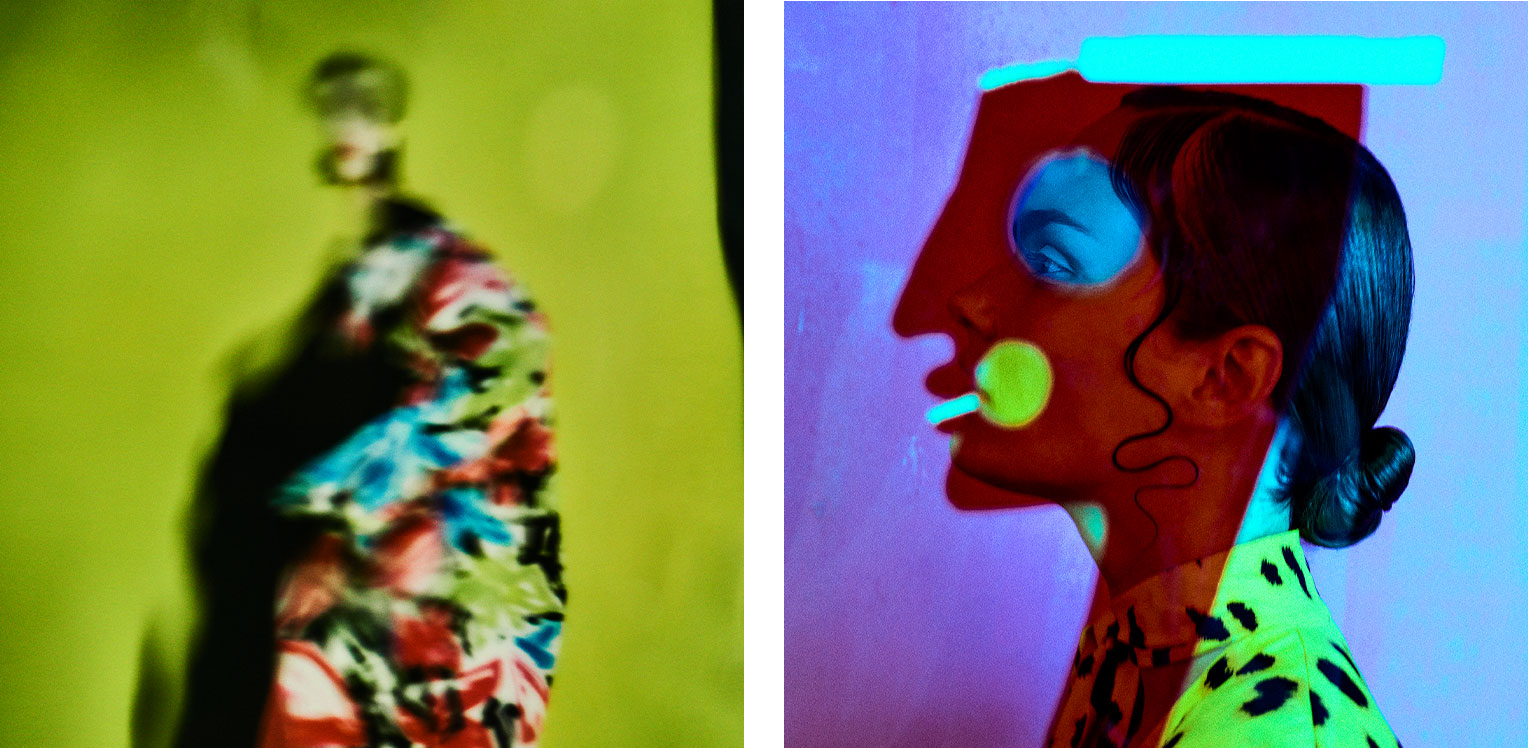
I don’t see it as a contradiction. Everything is staging — even the light is an intervention. But truth emerges when you recognise someone in their stance. I don’t impose a truth on anyone. All I have is my gaze. I use it to highlight what is already present in the other person. I get hired because they want it to look like Schuller — but that only works if the person becomes even more visible in the process.



That sounds like a great deal of trust.
Absolutely. It’s an exchange. I can’t work without the person in front of me, and they can’t work without me in that moment. We create the image together. Only then does something real emerge.
How do you create that exchange — especially with people who are known for being difficult to open up?
By not pretending. No pose, no fan behaviour. I ask: “Do you want a coffee first, or should I tell you what I’m planning?” And then I explain what I see, which story I want to tell. When someone realises there’s a thought behind it, a vision, trust follows. It’s like a good director: you don’t work on the person, you work with them.
You grew up in the grey-on-grey of Romania, you’ve spoken about those streets — and yet your images are the opposite: colourful, opulent, full of life. A deliberate counter-movement?
Absolutely. I grew up in a time when everything looked the same. Houses, clothes, the sky — everything grey. And when I first saw images of Paris — that light, that elegance, that freedom — I knew I wanted colour. Later, at Vivienne Westwood, I learned that colour is a stance. Peggy — my wife — studied there too, a few years after me. Vivienne taught us not to be afraid of beauty. I think my love of opulence is a response to what was missing.
And that joy, that curiosity — it’s still there. I’ve kept the sense of wonder. I’m sometimes shocked when people become so serious. I still see myself as a student excited for what comes next.
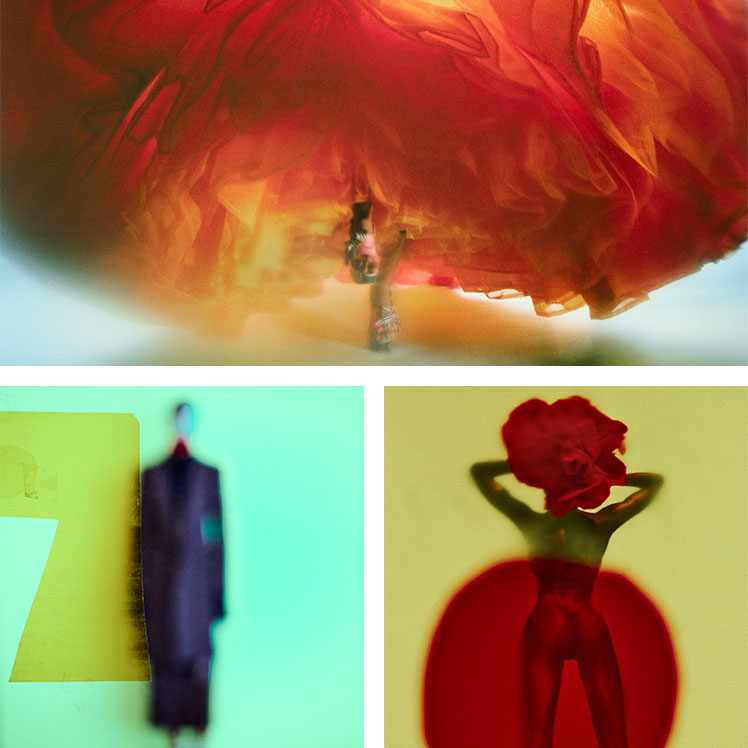
In your exhibition "Pictures", you show the full range of your work — from expressive fashion tableaux to quiet portraits. What ties these worlds together?
"Pictures" is like a conversation between my worlds. There are the big, theatrical colour images. And alongside them, the black-and-white portraits — people without a stage, sometimes villagers from my childhood, faces you’d never otherwise encounter. I wanted to show that both belong together. The grand gesture and the quiet moment come from the same longing — for authenticity.
I often think back to the grey of my childhood when I look at these pictures. Maybe I paint with light today to make up for all of that.
If someone were to photograph you — what do you think they’d see? (laughs)
That’s for the other person to decide. I’m happy when others are vain enough to want me to photograph them. That’s my playground. When I put the camera down, life simply becomes normal again — and that’s the beauty of it.
Our editor-in-chief met an artist who sees, in every face, not a subject but an encounter.


