
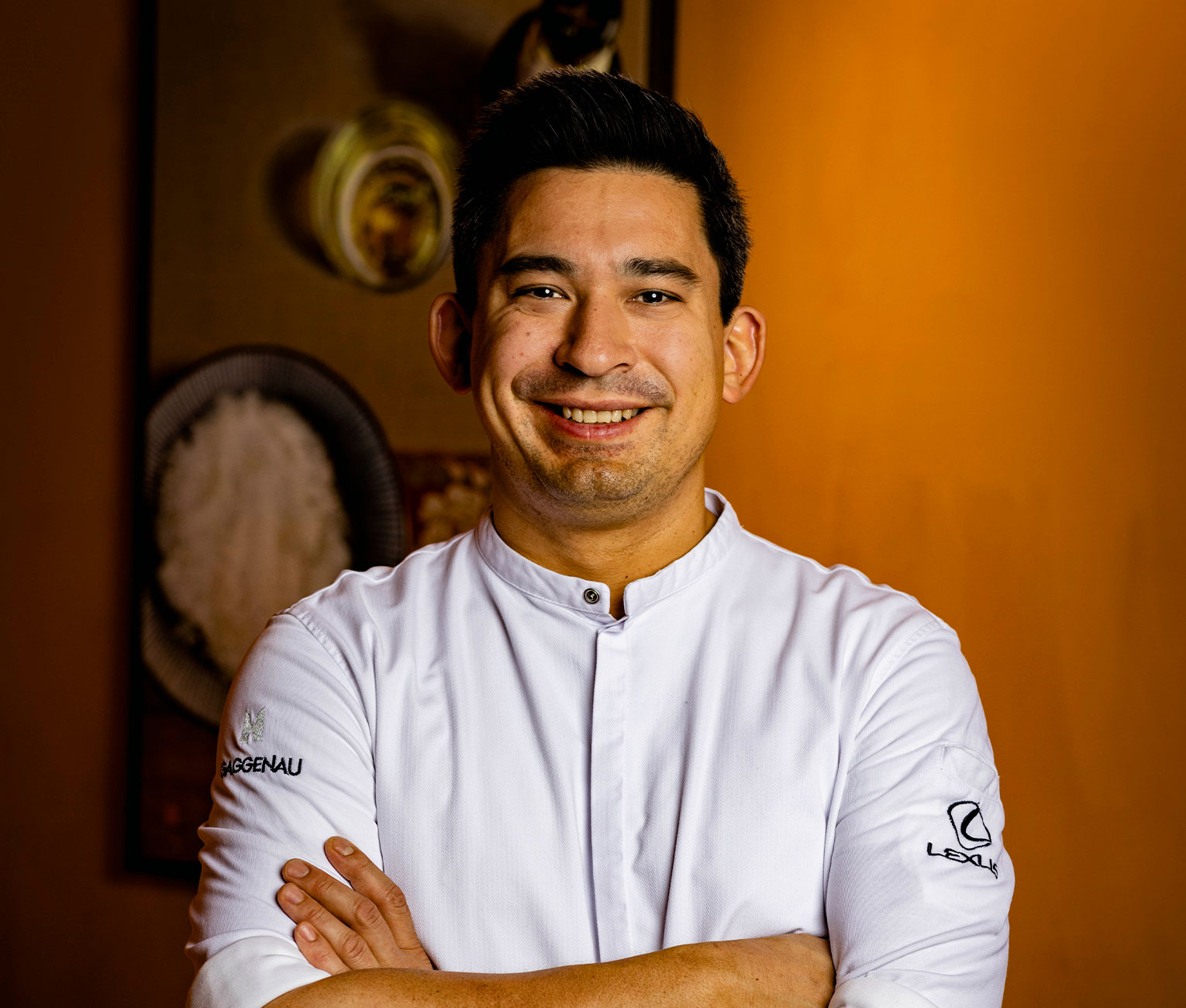
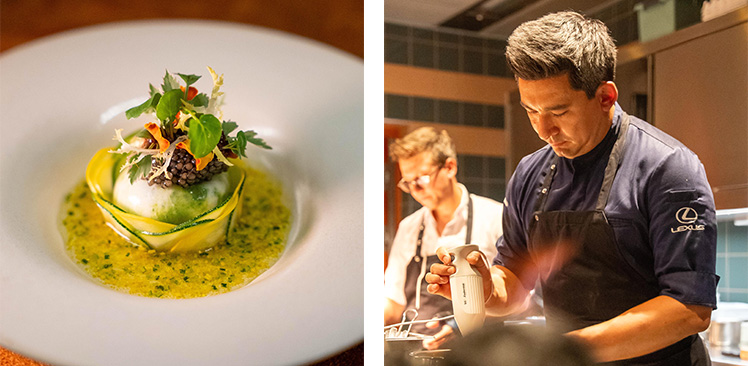
We met a man who has just made history – three stars, in the middle of Munich, in the middle of life. What impresses most: Tohru Nakamura achieved all of this without ever being anyone but himself. No theatrics, no loud gestures – just a finely tuned sense, clear craftsmanship, and a distinctive mindset.
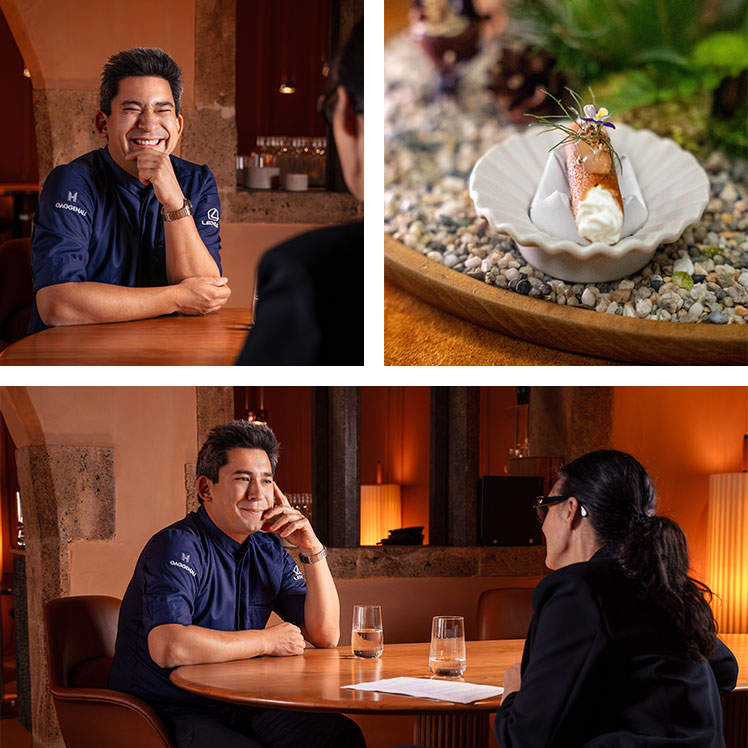
We were able to soak in the atmosphere of Tohru in der Schreiberei, feeling the midday calm before the storm, sensing that in a few hours, when guests arrive, a very special energy would fill the room. What followed was a conversation with a remarkable person – not about kitchen secrets, but about what remains once all the courses are served.
AVIAIR: Tohru, you’ve just received your third star. What was the first thing you thought – just to yourself?
TOHRU NAKAMURA: It’s hard to describe what goes through your mind in that moment. Achieving what so many chefs dream of is deeply emotional. But it’s also a moment of reflection. You realize it’s the result of 25 years of work coming together in that instant. It’s almost unbelievable when the restaurant’s name appears on the screen during the ceremony – it lasts only a fraction of a second. But compared to all the years before, it’s the moment that validates everything.
That sounds like a very intense feeling. Would you say that moment is more about reaching a goal, or is it a new beginning?
It feels more like a new beginning. We never explicitly set out to get three stars. Of course, we aim to improve every day, but the star itself was never the ultimate goal. For us, it’s always been about giving our best every day and growing consistently. The goal is not the star – it’s the process. And this moment is more a confirmation that we’re on the right path.
Has the third star changed your inner standards, or were they always there? Is the pressure now even greater?
The first week after the award felt really strange. We were on vacation when the three stars were announced, and when we returned, there was definitely a certain tension in the air. It was a moment of celebration, but also of reflection. We didn’t dive straight into work – we first gathered the whole team to celebrate together, from trainees to the head chef. Experiencing this moment collectively was important. But of course, the pressure that comes with the recognition is real. It’s almost as if you have to constantly live up to this high standard now.
But the focus remains on continuous improvement, as you said. Still – how does it feel when guests arrive, some from far away, saying, "You have three stars now, we have to see this"?
That’s certainly special. There are guests who travel from other countries just to dine at a three-star restaurant. It really shows the international relevance we’ve gained. But on the other hand, we’ve always had many international guests. Munich is well-connected via its airport, and you can feel that – guests from all over the world come to Munich and also to us.
The Schreiberei is right in Munich’s old town. What does this location mean to you?
This location is very special to me. Marienplatz has a very personal significance for me as a Munich resident. And even though I’m not originally from the city but from Baldham, about 20 minutes away, I’ve always found a sense of home here. The heritage protection in this area ensures the old town’s character is preserved, which is invaluable. Working here feels like a privilege. We aim to offer our guests not just great food, but also a piece of Munich.
Will anything change in the restaurant because of the third star?
The room for change is actually very limited because of the heritage protection right next to us. But I think that’s a good thing – the regulations help preserve the old town’s charm while we create our own culinary experience. There’s no drastic change. We stay true to ourselves and strive to give our best every day.
You work with many regional ingredients. What does that mean to you – proximity, trust, flavor?
The relationship with our suppliers is incredibly important. We’re not just looking for good products, but also partners we can collaborate with creatively. It’s not just about buying ingredients, but about developing them together and always bringing out the best in the products. Ingredient quality is key, but dialogue is just as important. We’re not dogmatic about regionality. Of course, we prefer regional products, but if something from farther away is of the highest quality – like Japanese beef – then that’s also an essential part of our standards.
Is there a regional product that’s especially close to your heart?
Yes, the asparagus, which is available to us only for a very short period each year. We source it from a family that supplies us for about five or six weeks annually. This close relationship with suppliers and appreciation for seasonal products is something we take very seriously. Without these partnerships, we couldn’t guarantee the quality we want to offer our guests. Speaking of regiona
Speaking of regionality and heritage: your father is Japanese, your mother German. What did you take from both that you still feel today?
My parents taught me above all the appreciation for good food. But it’s not just about the food itself – it’s also about the attitude toward preparing it. From my father, I inherited discipline and seriousness. He made me attend Japanese school on Saturdays from an early age – a discipline that still shapes me today. It was a challenge, but also a valuable lesson in perseverance.


Is there something either of them gave you early on – a phrase, a gesture you’ll never forget?
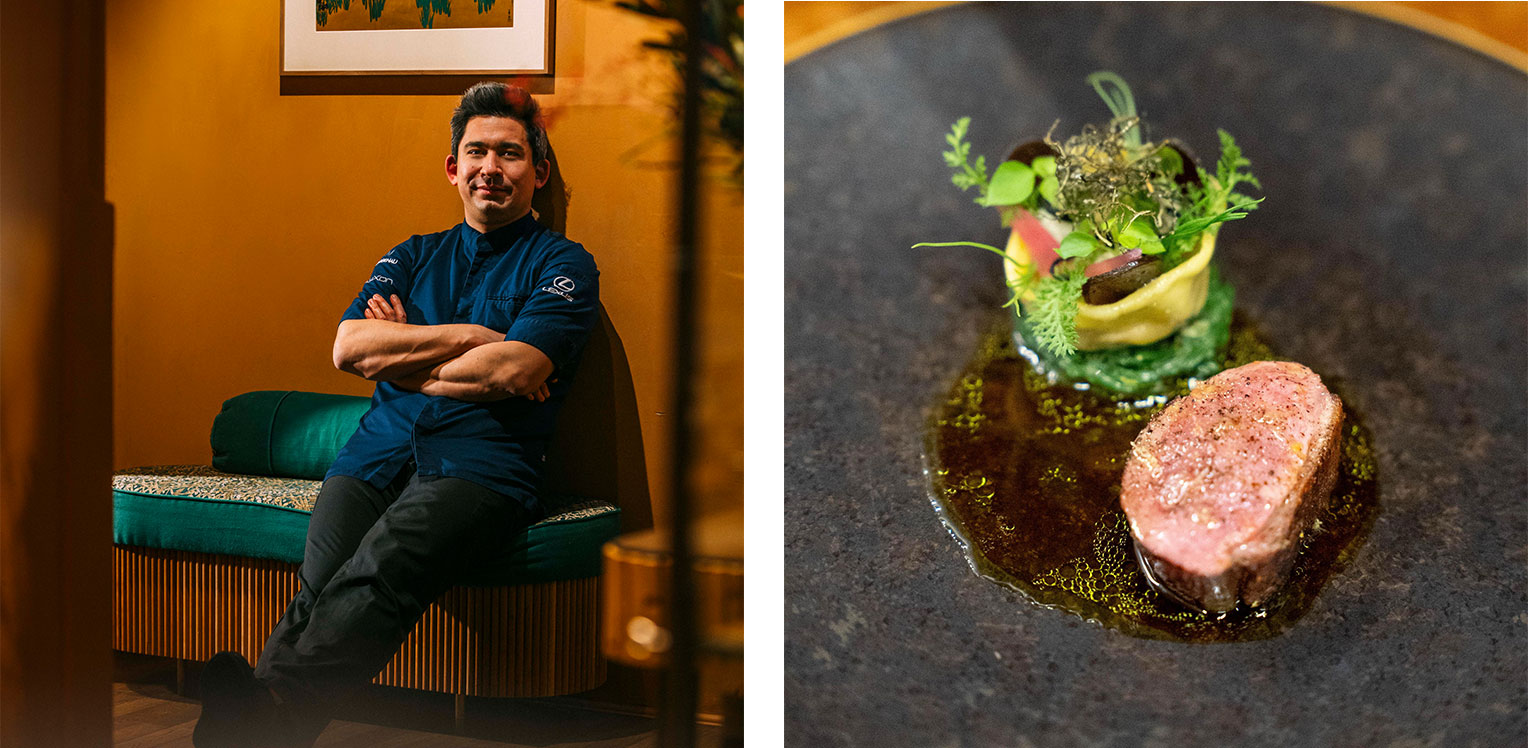
One phrase that has stayed with me comes from my father: ‘No half measures.’ For him, it was obvious that you commit fully to something once you decide to do it. This attitude has always accompanied me in my career as a chef. It’s not about achieving something quickly, but about doing it right.
They say in Japan, an omelet shows a chef’s entire mindset. How much of your philosophy is reflected in your omelet?
I always try to balance simplicity and perfection in the omelet. It’s a very simple dish, but it requires a high degree of precision. Perhaps it reflects more of me than I even realize. It shows how well you master the basics while remaining creative.
W hat does one learn from an omelet that isn’t as clearly demonstrated in a full menu?
An omelet is the perfect example of precision and patience. It forces you to focus on the smallest details. It’s like a test where you can’t cheat. If the omelet isn’t perfect, it’s immediately obvious. It’s a lesson in simplicity and craftsmanship.
An omelet is also a dish people often cook at home. You have two children. How does cooking work at home? Who usually cooks during the week?
At home, I mostly cook. During the week, I often prepare simple meals – rice, pasta, lots of vegetables. It’s important that it’s quick but still tastes good. My children enjoy it, and that’s what matters most. It’s a very different way of cooking than in the restaurant. It’s less about perfection and more about eating together and enjoying the moment.
Is there a dish that particularly unites your family?
One of the dishes that unites us is simply rice. It may sound trivial, but it’s the foundation of every meal. For us, it’s more than a dish – it’s a symbol of home.
…a dish full of emotion. If your cuisine – in the restaurant – were a feeling, what would it be?
It would be a mix of humility and fireworks. A humble approach in preparation, but with an explosion of flavors and impressions meant to surprise and delight our guests.
You come across as incredibly authentic, calm, and clear. Is there anything that helps you stay that way, even in stressful times?
Yes, I try to remain calm in hectic moments. There’s always stress, but it’s about maintaining balance and not losing who you are. I’ve learned not to be driven by external expectations, but to live my own truth.
Morning or night person?
Night person
Weißwurst or Currywurst?
Weißwurst in the morning, Currywurst around one or two a.m.
Skis or swim trunks?
Both, happily! Skis in winter, swim trunks in summer.
Beer or Champagne?
In recent weeks (for obvious reasons), a lot of Champagne. We’ve also received many wonderful bottles from colleagues, suppliers, partners, and friends.
Chess or Uno?
Tough question. I basically grew up with chess. And Uno, of course, is the classic party game – perfect for the beach, for example.