

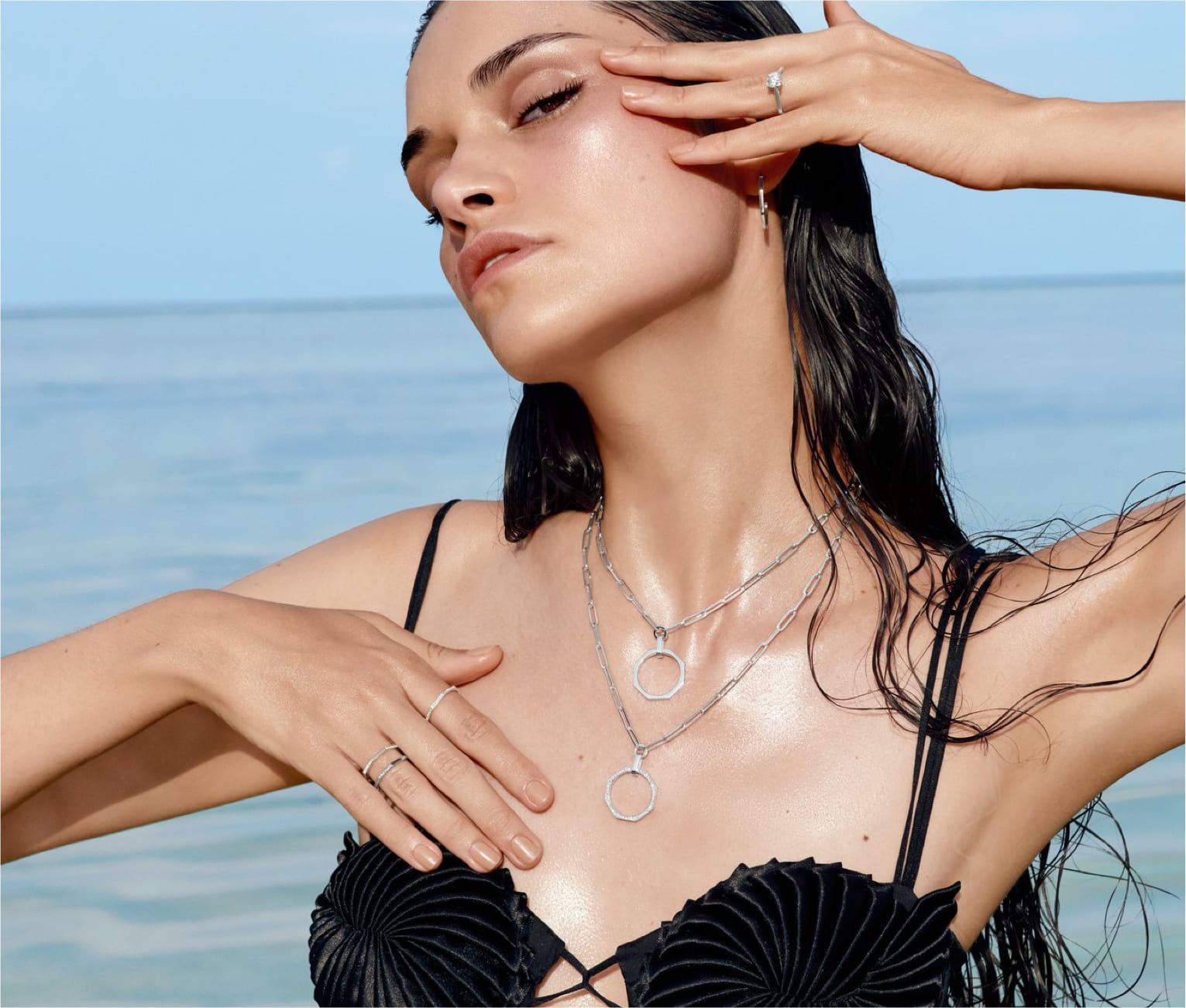
And that is where mandana and Nevermined position themselves. Together with Christine Marhofer, they have not simply created a jewellery brand, but they have entirely reimagined the approach to sustainable diamond jewellery "Made in Germany". Lab-grown diamonds produced in-house, recycled precious metals, transparent value chains and an understanding of luxury defined by responsibility rather than rarity.
That grew my desire to create something lasting. Diamonds had always fascinated me because of their permanence and what they represent.
When I came across lab-grown diamonds during my research, it became clear to me very quickly: if I wanted to develop jewellery with a genuine commitment to sustainability and responsibility, I needed to rethink the origin of the materials and translate it into a contemporary alternative.
Looking back at the beginning, what did you consciously want to do differently from traditional jewellery brands?
I did not want to define luxury through rarity or scarcity, but through transparency, quality and the origin of materials. From the very beginning, it was important to me to think about the entire production process from the diamond and the precious metal to the jewellery box itself.
I wanted to demonstrate that conscious luxury is not less beautiful, less emotional or less valuable. On the contrary, its origin and underlying values give it an additional layer of meaning.
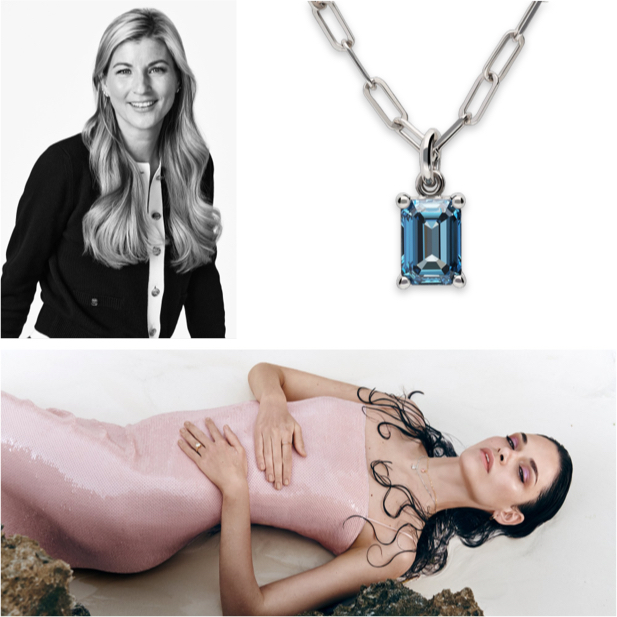
At what point would you say luxury truly becomes sustainable? Is a better material enough – or do you have to consider the entire value chain?
A better material is a start, but it is not enough. Truly sustainable luxury only emerges when you consider every step involved. Where does the diamond come from? What kind of energy was used to produce it? What precious metals are used, and where do they come from? Who makes the jewellery? Under what conditions? How durable is the product?
To me, true luxury today is something you can wear, gift and pass on with a good feeling. A piece of jewellery as an expression of your own – that is what we see as conscious luxury.
Many brands today place sustainability at the center of their communication. How do you distinguish between genuine change and pure messaging?
Genuine change can be substantiated. Nevermined was the first company in Europe to receive SCS 007 certification for its lab-grown diamonds – one of the strictest sustainability standards for diamonds. Among other things, this certification verifies the traceability of every individual diamond, the energy consumption, social responsibility and environmental aspects.
Communicating sustainability is important, but it also needs to be substantiated.
Lab-grown diamonds are still met with scepticism by many people. Why do you think that is?
I believe it is primarily because many people still do not really know what a lab-grown diamond actually is. Many confuse them with imitations such as zirconia or moissanite. But lab-grown diamonds are not imitations: they consist of pure carbon and are optically, chemically and physically identical to mined diamonds.
As soon as people understand that they are genuine diamonds with a different origin, perceptions change very quickly.
Historically, mined diamonds have long been associated with myths of rarity, eternity, geological origin and exclusivity. What do you see as the alternative to mined diamonds?
We are giving eternity a new definition. A lab-grown diamond can also stand for eternity because it is created responsibly and contributes to preserving resources.
The diamond remains a symbol of love, memory and permanence – but with an origin that points towards the future.
You made a conscious decision to produce the diamonds in Germany. What role does this proximity play in terms of responsibility and control?
It definitely plays a significant role. Production in Germany allows us to oversee and continuously refine every step of the process. At our Nevermined Lab in Essen, more than 245,000 rough carats are currently grown each year using the CVD process. This proximity creates transparency, credibility and the highest level of quality.
You could also have sourced the diamonds externally. Was there a champion close to you to take production into your own hands?
Because during my research, I quickly realized that there were hardly any transparent ways of sourcing lab-grown diamonds with the level of quality and traceability I had envisioned.


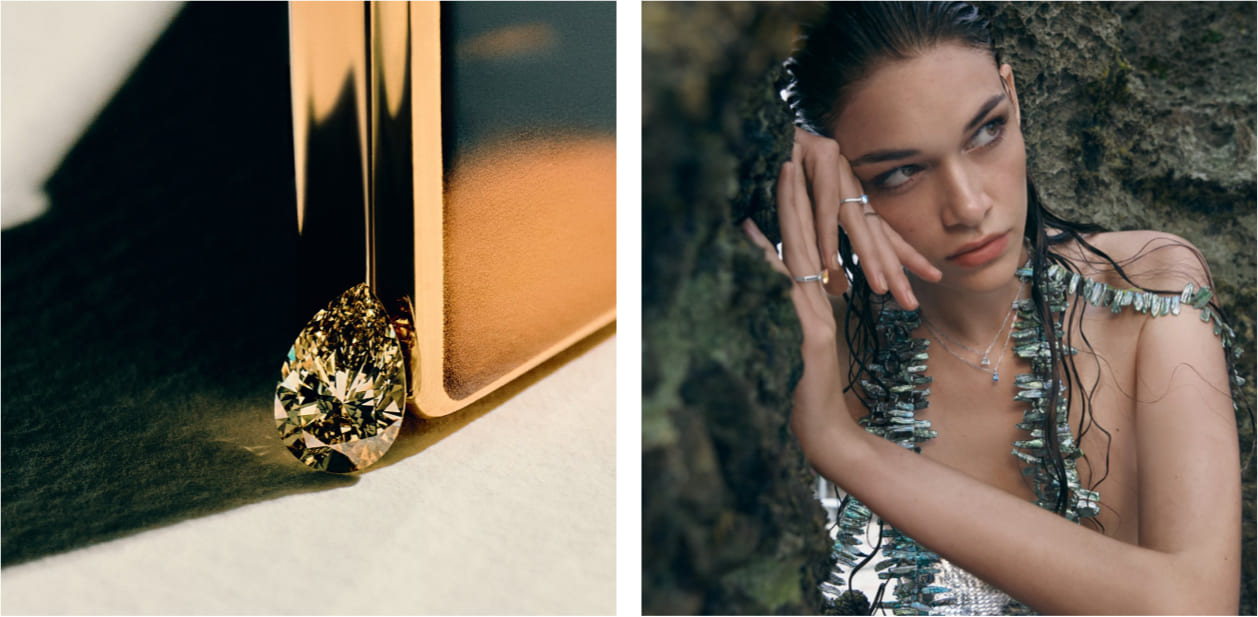
AVIAIR: Christine Marhofer explains to us why she wanted to rethink every stage of production, why sustainability is far more than a passing trend – and why the next generation understands luxury differently.
CHRISTINE MARHOFER: It was less a single moment than a growing awareness. I studied business administration and spent many years observing how quickly trends emerge and disappear again.
That is why we founded Nevermined: to bring the value chain to Germany and grow the diamonds ourselves.
We are giving eternity a new definition.
You refer to your customers as the "Next Generation". In your view, what distinguishes them from previous generations?
The Next Generation thinks differently about value. They do not simply want to own something, but want to understand where a product comes from, how it is made and what impact a purchasing decision may have.
At the same time, these people do not want to compromise on style, quality or emotional value. And these are the people we created mandana for.
mandana is not simply about beautiful jewellery, but about values and responsibility. Our designs are symbols of connection, individuality and the future.
We want to create jewellery that does more than simply sparkle; it should say something about the person wearing it – and about the world they want to live in.
And what distinguishes the vision behind mandana from that of traditional jewellery brands?
Lab-grown diamonds are no longer merely seen as a vision of the future but are increasingly becoming part of a new reality in the jewellery industry. What Christine Marhofer has built with Nevermined and mandana demonstrates that sustainability and luxury no longer have to be contradictions.
This is where a new definition of value begins – not defined by what is extracted from the earth, but by transparency, responsibility and the decision to rethink beauty itself.


